What is Pranic Healing?
Definition and Core Concept
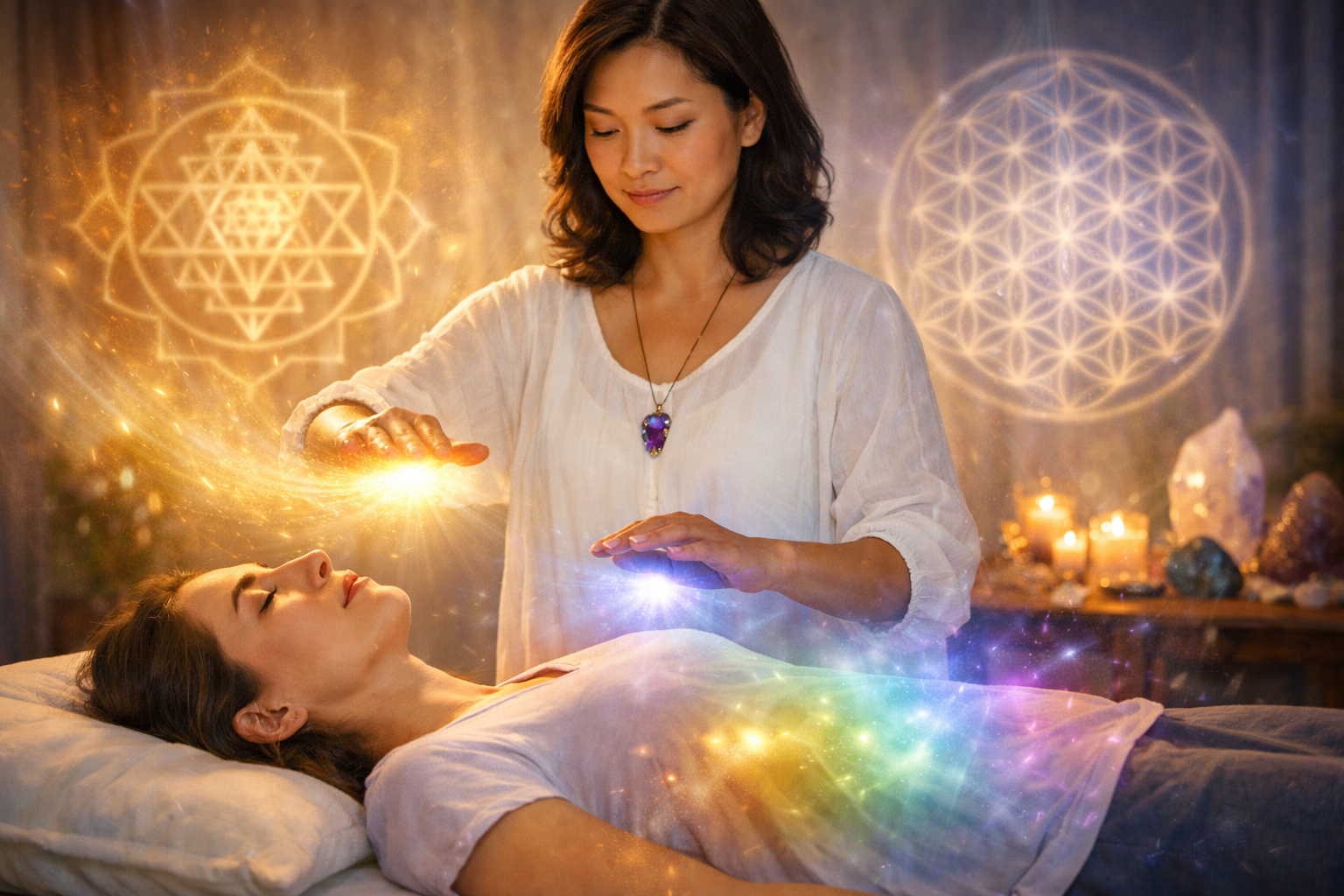
Imagine your body not just as flesh and bones, but as a glowing network of energy constantly flowing and interacting with your thoughts, emotions, and surroundings. That’s exactly where Pranic Healing steps in. It’s a no-touch, no-drug energy healing system that works on the principle that the body can heal itself faster when its energy field is balanced and cleansed.
At its core, Pranic Healing focuses on the energy body (also called the aura), which surrounds and interpenetrates the physical body. According to research, imbalances in this energy body often manifest as physical or emotional illness.
Unlike conventional treatments, Pranic Healing doesn’t rely on physical manipulation or medication. Instead, it uses life force energy—known as “prana”—to remove blockages and energize affected areas. Think of it like cleaning a clogged pipe before fixing the water flow. When energy flows smoothly, your body naturally restores balance.
What makes it fascinating is how it blends ancient wisdom with structured techniques. It’s not just belief-based; practitioners follow specific protocols involving scanning, cleansing, and energizing. That systematic approach is why many consider it more than just a spiritual practice—it’s seen as a complementary healing method.
Origin and History of Pranic Healing
Pranic Healing may sound modern, but its roots trace back thousands of years. Ancient civilizations across India, China, and Egypt already understood the importance of life energy—referred to as prana, chi, or ki. These traditions laid the foundation for what we now call energy healing.
The modern system of Pranic Healing was developed and popularized in the late 20th century by Master Choa Kok Sui. His goal was simple yet ambitious: transform healing from an art into a structured, teachable science. He studied ancient practices, experimented, and systematized techniques so that ordinary people—not just spiritual masters—could learn them.
Today, Pranic Healing is practiced in over 100 countries and is often integrated into wellness programs. It’s commonly used alongside modern medicine, not as a replacement. In fact, many practitioners emphasize that it works best as a complementary therapy, enhancing the body’s natural recovery process.
How Pranic Healing Works
The Concept of Prana (Life Energy)
At the heart of Pranic Healing lies a simple but powerful idea: everything is energy. Your body isn’t just physical—it’s energized by a subtle life force called prana. Without it, life simply wouldn’t exist.
Prana is everywhere—in the air, sunlight, and even the food you eat. The body absorbs this energy and distributes it to organs and tissues. When the flow of prana is smooth and balanced, you feel healthy and vibrant. But when it’s blocked or depleted, problems begin to appear.
Pranic Healing works by drawing in fresh energy from the surroundings and directing it to areas that need healing. It’s like recharging a battery. Instead of waiting for your body to slowly recover, this process accelerates healing by boosting energy levels.
Interestingly, practitioners don’t use their own energy. They act as channels, pulling energy from natural sources. This makes the process safe and sustainable, both for the healer and the patient.
Role of Chakras and Aura
Now, let’s talk about the body’s energy control system—chakras. These are spinning energy centers that regulate different organs and functions. Think of them as switches controlling various parts of your body.
Each chakra has a specific role. For example:
- The heart chakra influences emotions
- The solar plexus chakra affects digestion and stress
- The crown chakra connects to higher consciousness
Surrounding all of this is the aura, the energetic field that reflects your physical and emotional state. When your aura is clean and strong, you feel energetic and positive. When it’s weak or dirty (filled with negative energy), you may feel tired, anxious, or even physically unwell.
Pranic Healing targets both chakras and the aura, cleansing and energizing them.
Principles Behind Pranic Healing
Law of Self-Recovery
One of the most empowering ideas in Pranic Healing is this: your body already knows how to heal itself. Whether it’s a cut, a cold, or emotional stress, your body constantly works to restore balance.
Pranic Healing simply speeds up this natural process. By clearing energy blockages and supplying fresh prana, it creates the ideal environment for faster recovery.
Think of it like watering a plant. The plant already knows how to grow—you’re just giving it what it needs to thrive.
Law of Life Energy
The second principle is equally important: life energy is essential for healing. Without sufficient prana, the body struggles to repair itself.
Pranic Healing increases the availability of this energy, ensuring that cells, tissues, and organs get the support they need. This is why many people report feeling lighter, calmer, and more energized after sessions.
Types of Pranic Healing Techniques
Basic Pranic Healing
This is the foundation. It involves simple techniques like:
- Scanning the energy body
- Removing dirty or stagnant energy
- Energizing with fresh prana
It’s often used for minor ailments like headaches, fatigue, and stress.
Advanced Pranic Healing
Here, things get more refined. Practitioners use colored prana, each with specific healing properties. For example, certain colors are believed to accelerate healing, while others calm the nervous system.
Pranic Psychotherapy
This branch focuses on emotional and mental health. It works by removing negative emotional energies such as fear, anger, and anxiety. According to reports, it can help release deep-seated emotional trauma and improve mental clarity.
Benefits of Pranic Healing
Physical Health Benefits
Pranic Healing is often used as a complementary therapy for physical conditions. A 2023 randomized controlled trial found that patients receiving Pranic Healing alongside standard treatment showed 83.33% improvement in diabetic foot ulcers, compared to 44.4% in the control group.
That’s a significant difference, suggesting that energy healing may enhance recovery when combined with medical care.
People also report benefits like:
- Faster wound healing
- Reduced pain and inflammation
- Improved energy levels
Emotional and Mental Benefits
Ever felt emotionally drained for no clear reason? That’s where Pranic Healing shines. By clearing emotional blockages, it helps:
- Reduce stress and anxiety
- Improve focus and clarity
- Enhance emotional resilience
It’s like decluttering your mind—once the negativity is removed, everything feels lighter.
Spiritual Growth
Beyond physical and emotional healing, many people use Pranic Healing for spiritual development. Practices like Twin Heart Meditation are designed to expand awareness and promote inner peace.
Scientific Research and Evidence
Clinical Studies and Findings
While energy healing is often debated, there’s growing interest in its scientific evaluation. Studies have shown:
- Improved wound healing outcomes
- Reduced stress levels
- Better sleep and symptom management in certain conditions
These findings suggest that Pranic Healing may have measurable benefits, especially as a supportive therapy.
Limitations and Criticism
That said, not everyone is convinced. Critics argue that:
- Evidence is still limited
- Results may be influenced by placebo effects
- More large-scale studies are needed
It’s important to approach Pranic Healing with an open yet critical mindset.
Pranic Healing vs Reiki
Key Differences
| Feature | Pranic Healing | Reiki |
| Method | Cleansing + Energizing | Channeling energy |
| Contact | No-touch | Often hands-on or near body |
| Approach | Structured techniques | Intuitive flow |
| Training | Step-by-step system | Attunement-based |
What Happens During a Session
Step-by-Step Process
A typical session includes:
- Scanning the energy field
- Cleansing negative energy
- Energizing with fresh prana
- Stabilizing the energy
Sessions are usually relaxing—you might feel warmth, tingling, or deep calm.
Can You Learn Pranic Healing?
Yes, absolutely. One of the biggest strengths of Pranic Healing is that it’s easy to learn. Courses are available worldwide, and even beginners can start practicing basic techniques.
Training typically includes:
- Understanding energy anatomy
- Learning healing protocols
- Practicing meditation
Is Pranic Healing Safe?
Safety and Precautions
Pranic Healing is generally considered safe because:
- It’s non-invasive
- No drugs are involved
- No physical contact is required
However, it should always be used as a complementary therapy, not a replacement for medical treatment.
Who Should Try Pranic Healing?
Pranic Healing is suitable for:
- People dealing with stress or anxiety
- Those recovering from illness
- Anyone seeking holistic wellness
- Individuals interested in spiritual growth
If you’re looking for a natural, gentle way to support your health, it might be worth exploring.
Conclusion
Pranic Healing opens a fascinating door into the world of energy and self-healing. It challenges the way we think about health, shifting the focus from just the physical body to a more holistic view that includes energy, emotions, and consciousness.
While science is still catching up, early research and countless personal experiences suggest that it can be a powerful complementary tool. Whether you’re curious about alternative therapies or actively seeking balance in your life, Pranic Healing offers a unique path—one that’s both ancient and surprisingly modern.
FAQs
1. Does Pranic Healing really work?
Many people report positive results, and some studies show improvements when used alongside medical treatment, though more research is needed.
2. Is Pranic Healing scientifically proven?
There is emerging evidence, but it’s still considered complementary rather than mainstream medical science.
3. Can Pranic Healing cure diseases?
It is not a replacement for medical treatment but may support healing and recovery.
4. How many sessions are needed?
It depends on the condition. Some people feel better after one session, while others need multiple sessions.
5. Can beginners practice Pranic Healing?
Yes, basic techniques can be learned easily with proper training.