By Purrna Kraleti, Psychotherapist & Holistic Wellness Expert | Phoenix Soul-utions, Visakhapatnam
After a long day of back-to-back sessions, meetings, or simply the weight of modern life, your body needs more than sleep — it needs a reset. That reset might be sitting in your bathroom cabinet right now, in the form of bath salt.
Bath salt has been used for thousands of years across ancient Egypt, Rome, and Ayurvedic Indian traditions. Today, science is catching up with what healers always knew: dissolving the right mineral salts in warm water can shift your nervous system, soften your skin, ease tired muscles, and genuinely calm a restless mind.
In this guide, we break down everything you need to know about bath salt — what it is, the different types, the science-backed benefits, how to use it correctly, and who should exercise caution. Whether you’re brand new to this ritual or looking to deepen your self-care practice, you’ll leave with a clear, practical framework.
| Expert Voice Purrna Kraleti, MA Psychology (Andhra University), is a psychotherapist and energy healer with 12+ years of experience, founder of Phoenix Soul-utions Holistic Wellness Center, Visakhapatnam. She integrates evidence-based psychotherapy with holistic modalities including NLP, yoga, crystal healing, and chakra work. |
What Is Bath Salt? Types and Origins Explained
Bath salt is not a single ingredient — it is a category of water-soluble mineral compounds used to enhance bathing. Each type has a distinct mineral profile and therapeutic focus, so choosing the right one matters.
Epsom Salt (Magnesium Sulphate)
The most widely studied bath salt, Epsom salt is not actually a salt in the culinary sense — it is a naturally occurring mineral compound of magnesium and sulphate. When dissolved in warm water, it is believed to be absorbed through the skin, delivering magnesium directly to muscle tissue. It is particularly popular for post-exercise recovery, stress relief, and reducing inflammation.
Himalayan Pink Salt
Harvested from the Khewra Salt Mine in Pakistan — at the foot of the Himalayas — this ancient sea salt contains 84 trace minerals including magnesium, potassium, calcium, and iron. Its warm pink hue comes from iron oxide. In bath form, it is prized for skin detoxification, improved circulation, and balancing the body’s electrolytes.
Dead Sea Salt
Dead Sea salt contains over 21 minerals, including unusually high concentrations of magnesium, bromide, and potassium. Dermatologists have long studied its efficacy for conditions such as psoriasis, eczema, and dry skin. Studies published in peer-reviewed journals have found that Dead Sea salt baths significantly improve skin barrier function.
Sea Salt
Produced by evaporating ocean water, sea salt retains trace minerals stripped away in refined table salt. It is widely used in scrubs and soaks for exfoliation, skin texture improvement, and a general detoxifying effect.
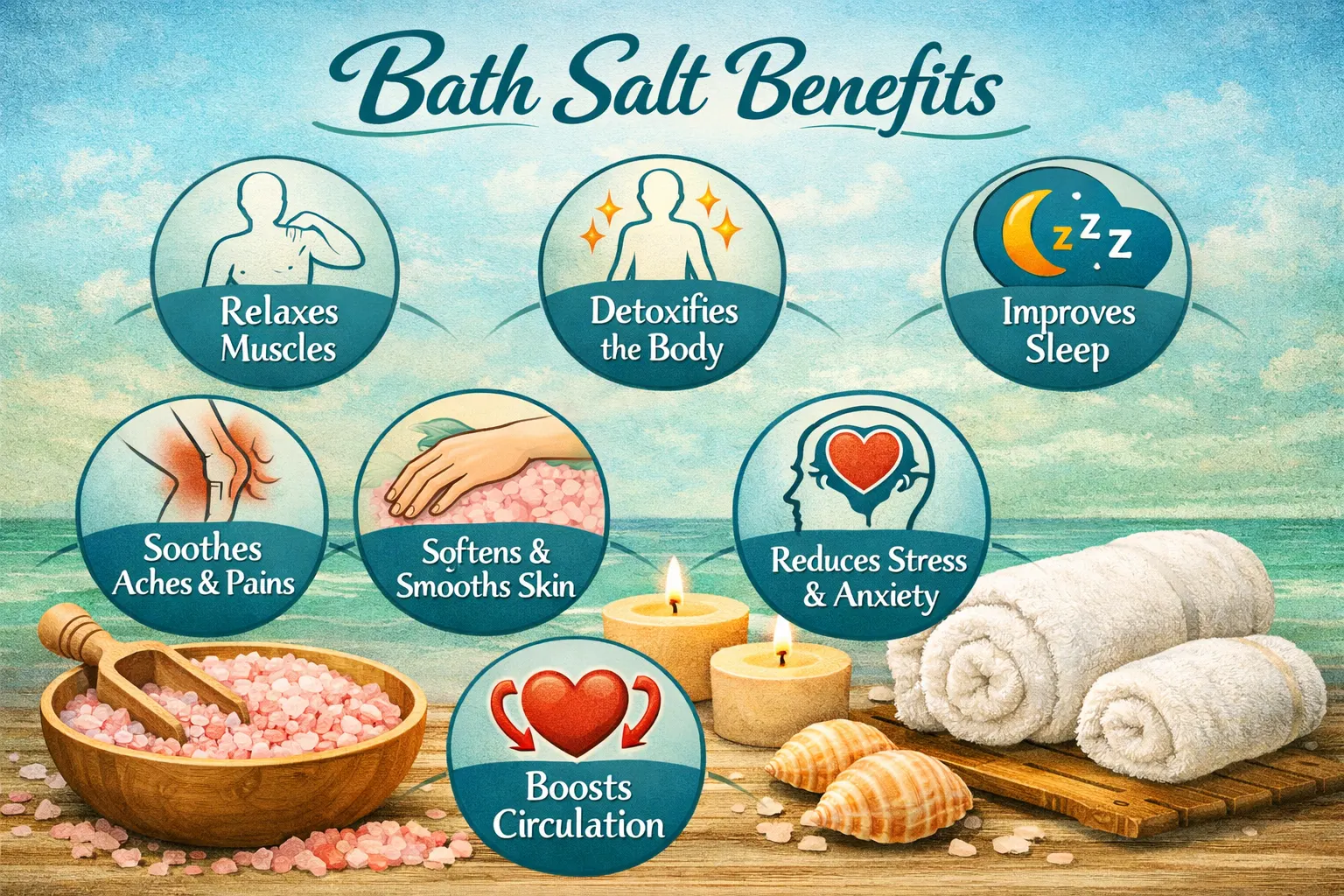
7 Evidence-Backed Benefits of Bath Salt
Let us go beyond marketing claims. Here is what the research and clinical practice actually support.
1. Muscle Recovery and Pain Relief
Magnesium plays a critical role in over 300 enzymatic reactions in the human body, including muscle contraction and nerve signalling. When muscles are overworked or under chronic stress, magnesium levels drop. Epsom salt baths are one of the oldest and most intuitive ways to replenish this mineral transdermally (through the skin).
Athletes, manual workers, and people living with fibromyalgia or arthritis consistently report reduced soreness and improved range of motion after regular Epsom salt soaks. While controlled clinical trials remain limited, the anecdotal and observational evidence is substantial — and the mechanism (magnesium absorption + warm water vasodilation) is physiologically sound.
2. Stress Reduction and Nervous System Regulation
This is where the psychotherapist’s perspective becomes important. Chronic stress keeps the body in a state of sympathetic nervous system dominance — the fight-or-flight mode. Magnesium acts as a natural antagonist to this state. It blocks NMDA receptors and regulates cortisol, helping the body shift into parasympathetic mode — the rest-and-digest state where healing occurs.
Warm water alone activates the vagus nerve, reduces heart rate, and lowers blood pressure. Combined with magnesium from bath salts and the addition of calming essential oils like lavender or chamomile, a bath becomes a genuine therapeutic intervention — not just a luxury.
| Clinical Insight from Purrna Kraleti “In my work with clients dealing with anxiety, burnout, and psychosomatic disorders, I often recommend a structured evening bath ritual as a somatic anchor — a signal to the nervous system that the day is done and safety has been restored. The minerals support the body; the ritual supports the mind.” — Purrna Kraleti, Phoenix Soul-utions |
3. Skin Detoxification and Deep Cleansing
Salt baths work through a process called osmosis: the high mineral concentration in the water draws out toxins, excess fluids, and impurities from the skin. This is why people often notice that their skin feels noticeably smoother, brighter, and more even-toned after a mineral soak.
Dead Sea salt, in particular, has been studied for its ability to strengthen the skin barrier, retain moisture, and reduce the inflammation associated with conditions like psoriasis and atopic dermatitis. A study in the International Journal of Dermatology found significant improvements in skin roughness and redness in eczema patients who bathed in Dead Sea salt water.
4. Improved Sleep Quality
Taking a warm bath 60–90 minutes before sleep has been shown in research to improve sleep onset. The mechanism is elegant: warm water raises core body temperature, and the subsequent cool-down triggers the release of melatonin — the sleep hormone. Magnesium compounds this effect by supporting GABA pathways, the brain’s primary calming neurotransmitter system.
If you struggle with racing thoughts at night, a 20-minute bath salt soak in the evening — with dim lighting and no screens — is one of the most well-supported non-pharmacological sleep interventions available.
5. Circulation and Lymphatic Support
Warm water causes blood vessels to dilate — a process called vasodilation. This improves circulation to the periphery, bringing oxygen and nutrients to tissues that may be chronically under-perfused due to sedentary work or poor posture. For people who spend long hours sitting at a desk, this circulatory boost can meaningfully reduce swelling in the feet, legs, and lower back.
The lymphatic system, which removes cellular waste and supports immune function, also benefits from the combination of heat, hydrostatic pressure (the gentle pressure of water on the body), and movement during a soak.
6. Exfoliation and Skin Texture Improvement
Salt crystals, used in a gentle scrub before or during a bath, are a natural physical exfoliant. They slough away dead skin cells, unclog pores, and stimulate cell renewal. Unlike synthetic exfoliants (microbeads), mineral salts dissolve completely in water — making them environmentally safe and gentle enough for most skin types when used correctly.
For best results, apply a small amount of damp salt in circular motions to the body before submerging, then rinse and soak for the remaining 15–20 minutes. Your skin will absorb minerals more efficiently once the surface layer is refreshed.
7. Emotional Grounding and Mind-Body Reset
From the perspective of holistic healing — including energy work and chakra therapy practised at Phoenix Soul-utions — bath salt rituals carry a deeper significance. Salt has long been used across cultures as a purifying agent, believed to absorb and neutralise energetic residue from the day.
Whether you approach this from a spiritual or purely physiological angle, the outcome is similar: a deliberate bath ritual signals a boundary between the stress of the day and the recovery of the evening. This ‘transition ritual’ effect is well documented in behavioural psychology — it helps the brain contextually switch off from work mode and enter restorative mode.
How to Use Bath Salt: A Step-by-Step Ritual
Getting the most from your bath salt depends on preparation, water temperature, duration, and frequency. Here is the optimal protocol, informed by both clinical practice and traditional wisdom.
Step 1 — Set the environment
Dim or turn off overhead lights. Light a candle if you have one. Put your phone in another room, or set a timer and flip it face-down. Your bath is a therapeutic space — protect it.
Step 2 — Fill with warm (not hot) water
Ideal temperature is 37–40°C (98–104°F) — warm enough to relax muscles and open pores, cool enough not to stress the cardiovascular system. Very hot baths can actually increase cortisol and leave you feeling drained rather than restored.
Step 3 — Add your bath salt
For a standard bathtub (approximately 150–200 litres), the recommended amounts are:
- Epsom salt: 1–2 cups (approximately 250–500g)
- Himalayan pink salt: 1–2 cups
- Dead Sea salt: ½–1 cup (more concentrated; less is needed)
- Infused/blended bath salts: follow the product’s guidance
Swirl the water to dissolve the salt before entering. Add 5–8 drops of an essential oil (lavender for calm, eucalyptus for respiratory support, rose for mood) — but always mix the oil into the salt first, never add undiluted essential oil directly to water.
Step 4 — Soak for 20–30 minutes
This is the minimum time needed for meaningful mineral absorption and nervous system downshift. Read a book, listen to calming music, or simply breathe. Breathe slowly and deeply — this activates the parasympathetic nervous system directly.
Step 5 — Post-bath care
Pat your skin dry gently — do not rub vigorously, as your skin is now in a receptive state. Apply a nourishing body oil or moisturiser immediately to lock in hydration. Drink a glass of water, as baths can be mildly dehydrating through perspiration.
| Frequency Recommendation For general wellness: 2–3 times per week. For acute stress or muscle soreness: daily for up to one week. For skin conditions like eczema: consult a dermatologist, as frequency varies by severity. Always listen to your body — if you feel dizzy or overly fatigued after a bath, reduce time or temperature. |
Who Should Exercise Caution with Bath Salt?
Bath salt is safe for most healthy adults, but there are important exceptions. Please consult your doctor before beginning a regular bath salt practice if you have any of the following conditions:
- Kidney disease — magnesium is processed by the kidneys; excess can accumulate
- Heart conditions or high blood pressure — hot water affects cardiovascular load
- Open wounds, infections, or broken skin — salt will cause irritation and may worsen infection
- Pregnancy — particularly important in the third trimester; always seek medical clearance
- Diabetes — foot soaks require extra caution due to compromised sensation and circulation
- Severe eczema or psoriasis flare-ups — start with a patch test and dilute concentrations
For children, use a quarter of the adult amount and reduce soak time to 10–15 minutes. Always supervise children in the bath.
How to Choose the Right Bath Salt for Your Needs
Not all bath salts are equal, and the best choice depends on what you are trying to address.
| Goal | Best Salt Type | Key Minerals |
| Muscle recovery / pain | Epsom salt | Magnesium, Sulphate |
| Skin detox / glow | Himalayan pink salt | 84 trace minerals incl. Iron, Potassium |
| Eczema / psoriasis | Dead Sea salt | Magnesium, Bromide, Potassium |
| Exfoliation / texture | Sea salt (coarse) | Sodium, Potassium, Calcium |
| Stress & sleep | Epsom + lavender blend | Magnesium + aromatherapy |
| Energy balancing (holistic) | Himalayan + crystal-infused blends | Full spectrum trace minerals |
Bath Salt and Holistic Wellness: The Phoenix Soul-utions Approach
At Phoenix Soul-utions Holistic Wellness Center in Visakhapatnam, bath rituals are recommended not as a stand-alone cure, but as part of an integrated self-care protocol. Purrna Kraleti combines psychotherapy, energy healing, and somatic practices to create whole-person wellness plans for her clients.
Bath salt soaks are particularly recommended as part of the evening wind-down protocol for clients managing anxiety, chronic stress, insomnia, and psychosomatic tension. When combined with breathwork, grounding affirmations, and adequate magnesium intake through diet, the cumulative effect on nervous system regulation is significant.
“The body holds what the mind cannot yet process,” Purrna explains. “A warm mineral bath, done with intention, is one of the simplest ways to begin releasing that held tension — not just from the muscles, but from the energetic and emotional layers of the body as well.”
This integrative model — rooted in both Western psychology and Eastern healing traditions — reflects the growing global recognition that wellness is not about single interventions, but about consistent, nourishing rituals practised daily.
Frequently Asked Questions About Bath Salt
Q1: Can I use bath salt every day?
Daily use is generally safe for healthy adults, especially if you are managing acute soreness or stress. However, very long or very hot daily baths can dry out the skin. If you bathe daily, keep sessions to 15–20 minutes, use lukewarm water, and always moisturise immediately after.
Q2: Does bath salt actually absorb through the skin?
Transdermal magnesium absorption is a debated topic in scientific literature. Some studies support it; others argue the skin barrier limits it. What is undisputed: the warm water itself relaxes muscles, the ritual calms the mind, and many people report measurable improvements in sleep, soreness, and mood. The benefits are real, even if the exact mechanism is still being refined by researchers.
Q3: Can I use bath salt in the shower instead of a bath?
Yes — use it as a body scrub. Mix a handful of coarse salt with a carrier oil (coconut, almond, or sesame), scrub in gentle circular motions on damp skin, then rinse. You won’t get the full mineral-soak benefit, but you will get excellent exfoliation and skin texture improvement.
Q4: Are scented bath salts safe for sensitive skin?
Plain, unscented mineral bath salts are safest for sensitive or reactive skin. If you want aromatherapy benefits, choose products where pure essential oils are used rather than synthetic fragrances (look for ‘fragrance-free’ or ‘100% pure essential oil’ on the label). Always do a patch test — dissolve a small amount in water and apply to the inside of your wrist for 20 minutes before your first full bath.
Q5: What is the best time of day to take a bath salt soak?
Evening is ideal for most people — 60–90 minutes before sleep leverages the body’s natural thermoregulation to enhance melatonin release. Morning baths are better for invigoration; use peppermint or eucalyptus essential oils rather than lavender. Mid-afternoon soaks are excellent for breaking the stress cycle of a difficult workday.
Your Bath Is Not a Luxury — It Is a Practice
The most underrated wellness intervention costs very little, requires no equipment, and is available to most people tonight. A deliberate bath salt ritual — done consistently, with the right minerals and the right intention — can meaningfully shift your physical and mental wellbeing over time.
Whether you begin with a simple Epsom salt soak after work, or you build toward a fully integrated evening ritual with aromatherapy, breathwork, and journalling, the most important step is the first one.