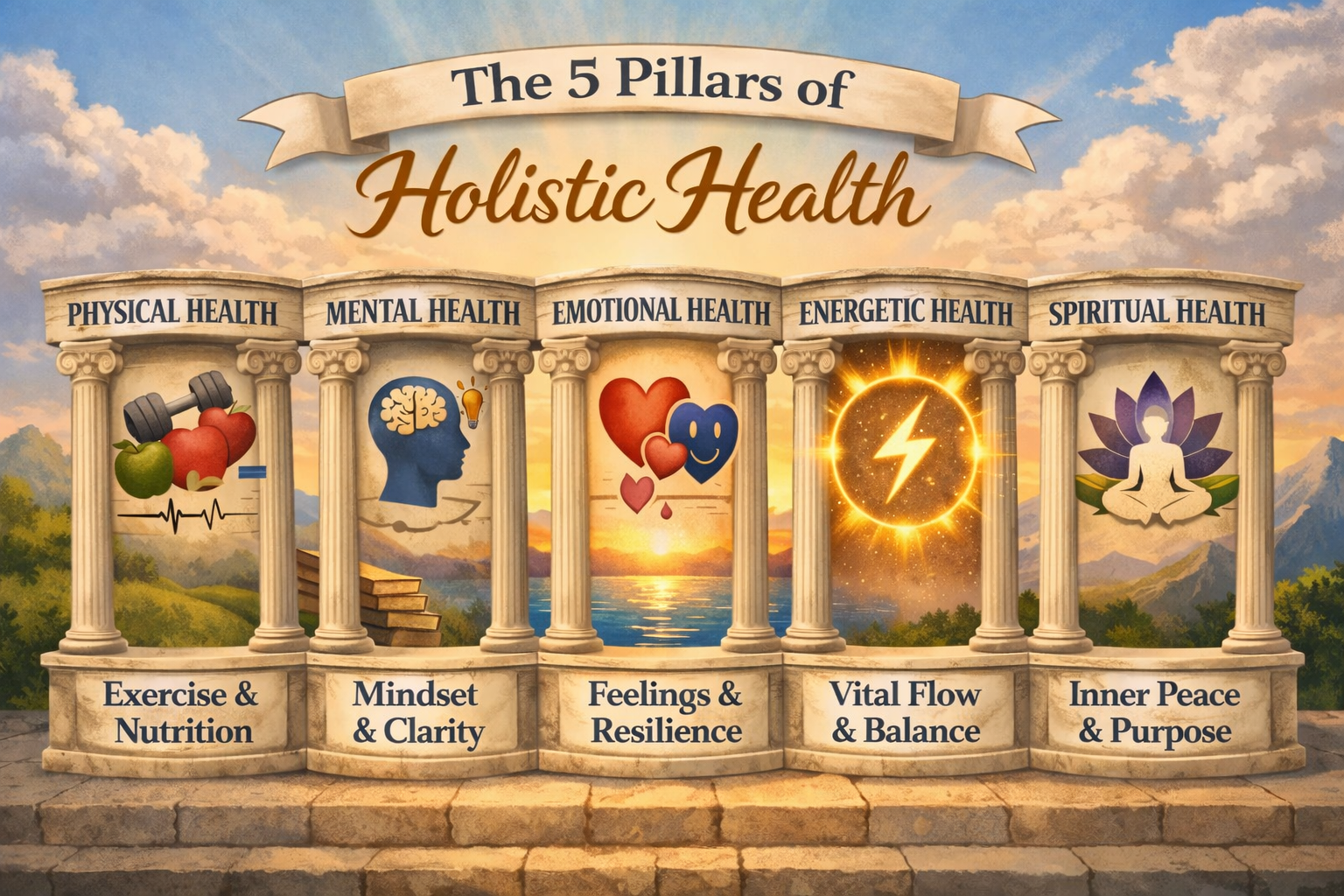
Most people think “health” means a clean diet, a gym routine, and a good night’s sleep. But real wellness runs much deeper than the body. True holistic health rests on five interconnected pillars — physical, mental, emotional, energetic, and spiritual — and neglecting even one can quietly undermine the rest. If you’ve been eating right and exercising but still feel stuck, anxious, or disconnected, the missing piece likely isn’t physical at all. Here’s what the other four pillars actually involve, and how to start strengthening them.
Why “Just the Physical” Isn’t Enough
For decades, mainstream wellness culture has equated health with the body alone — calories, cardio, and checkups. But the World Health Organization itself defines health as a state of complete physical, mental, and social well-being, not merely the absence of disease. Holistic health takes this further, recognizing that the mind, emotions, energy body, and spirit all shape physical outcomes just as much as diet or exercise do. When one pillar is ignored long enough, the body eventually absorbs the cost — through fatigue, illness, or a plateau that no amount of extra gym time seems to fix.
The Limits of a Body-Only Approach
Someone can run five kilometers a day and still battle chronic stress, unresolved grief, or a nagging sense of purposelessness. Physical fitness doesn’t automatically resolve emotional pain or spiritual disconnection — and unresolved stress in particular is known to manifest as physical symptoms like fatigue, tension, and digestive issues. This is why people often describe feeling “fine on paper” — good reports, decent fitness levels — while still feeling depleted, irritable, or disconnected from their own lives. The gap between looking healthy and feeling whole is almost always found in one of the other four pillars.
Why the Pillars Are Interconnected
Each pillar feeds the others. Chronic anxiety (mental) can disrupt sleep and digestion (physical). Suppressed grief (emotional) can create energetic blockages that show up as low motivation or recurring illness. A lack of spiritual direction can quietly fuel mental restlessness, making it hard to focus even when nothing is “wrong” on the surface. This is why a holistic wellness approach treats a person as a whole system rather than a set of isolated symptoms — addressing only the loudest complaint, like insomnia, without asking what’s driving it, rarely produces lasting change.
A Simple Way to Self-Assess
Before exploring each pillar, it helps to ask a few honest questions: Do I feel physically rested, or just caffeinated? Do my thoughts feel clear, or crowded? Do I process emotions, or postpone them? Do I feel energised, or drained for no obvious reason? Do I feel connected to a sense of purpose, or just going through motions? The pillar where the answer feels weakest is usually the one that needs attention first.
Pillar 1: Physical Health
Physical health is the foundation — but in a holistic framework, it’s viewed as an outcome of everything else, not just diet and movement. The body is often the last place imbalance shows up, and the first place people try to fix it.
Nourishment and Movement
Balanced nutrition, regular movement, and adequate rest remain essential. But holistic practitioners also look at how emotional patterns influence physical habits — for instance, stress-eating, skipped meals during anxious periods, or insomnia driven by racing thoughts rather than any physical cause. Treating the habit alone (say, “eat cleaner”) without addressing what’s driving it tends to produce short-lived results.
Rest and the Body’s Signals
The body constantly communicates through fatigue, tension, and pain. A tight jaw, a knot in the shoulders, or unexplained exhaustion are rarely random — they’re often the nervous system flagging unprocessed stress or emotion. Learning to listen to these signals, rather than only medicating them away, is central to holistic physical care.
When the Body Keeps Score
It’s common for physical symptoms — frequent headaches, digestive discomfort, low immunity — to persist despite normal test results. In a holistic model, this is often where the physical pillar intersects with the emotional or energetic ones, and where addressing the underlying pattern brings relief that purely physical treatment hasn’t.
Pillar 2: Mental Health
Mental health covers how you think, process information, and manage stress — the cognitive side of wellbeing. It’s distinct from emotional health, though the two are closely linked: mental health is about the mind’s patterns and processing; emotional health is about the feelings those patterns generate.
Managing Thought Patterns
Persistent negative self-talk, racing thoughts, or difficulty concentrating are signs the mental pillar needs attention. These patterns often run on autopilot, formed years earlier and rarely questioned. Techniques like NLP-based therapy help identify and reframe unhelpful thought patterns at their root, rather than simply managing symptoms as they arise.
Stress and Cognitive Load
Chronic stress narrows attention and impairs decision-making over time — a well-documented effect where sustained pressure reduces the brain’s capacity for planning and clear judgment. Structured stress management support helps restore mental clarity and resilience, especially for professionals and business owners juggling constant pressure and decision fatigue.
Mental Health in Daily Decision-Making
A mind under strain doesn’t just feel foggy — it makes worse decisions, at work and at home. Restoring mental clarity isn’t a luxury; it’s often the difference between reacting to problems and actually solving them.
Pillar 3: Emotional Health
Emotional health is about feeling, expressing, and processing emotions in healthy ways — not suppressing or being overwhelmed by them. It’s often the pillar people find hardest to name, because unlike physical symptoms, emotional strain doesn’t always announce itself clearly.
Processing vs. Suppressing Emotion
Many people were never taught how to sit with difficult emotions like grief, anger, or shame. Left unprocessed, these emotions don’t disappear — they resurface as anxiety, irritability, or physical tension, often at moments that seem unrelated to the original cause. Anger management and depression-focused Mental Space Psychology sessions give people structured tools to work through these patterns instead of burying them further.
Relationships and Emotional Wellbeing
Emotional health is rarely a solo journey — family dynamics, breakups, and business setbacks all shape it, and unresolved relational patterns tend to repeat until they’re addressed directly. Family counseling and psychotherapy for addictions addresses emotional health at the relationship level, not just the individual level, recognizing that a person’s emotional state rarely exists in isolation from the people closest to them.
Recognising Emotional Overload
Snapping at small things, feeling numb rather than upset, or avoiding situations that used to feel manageable are all signs of emotional overload rather than personal failing. Naming this early — before it hardens into a pattern — makes it considerably easier to work through.
Pillar 4: Energetic Health
This is the pillar most wellness programs skip entirely — yet it’s often where blockages originate long before they show up physically or emotionally. It’s also the pillar most unfamiliar to people new to holistic practices, simply because mainstream healthcare rarely addresses it at all.
Understanding Energy Blockages
Practices rooted in energy work hold that unresolved stress and emotion can create blockages in the body’s energy field, eventually manifesting as fatigue, illness, or a sense of being “stuck” in ways that don’t respond to rest or willpower alone. Energy healing works directly with this energetic layer, aiming to clear blockages rather than only managing their downstream effects.
Chakra Balancing and Crystal Work
Chakra healing and chakra balancing realigns the body’s seven energy centres, each associated with different aspects of physical and emotional functioning, while crystal healing uses specific stones to support and amplify that realignment. Many clients report noticeable shifts in clarity and motivation after just a few sessions — including measurable change captured through aura imaging, which offers a visual reference point for progress over time.
Who Energetic Work Tends to Help Most
People who describe feeling “stuck” despite doing everything “right” — eating well, sleeping enough, even attending therapy — often find that energetic work addresses a layer the other pillars alone don’t reach. It’s frequently used alongside, not instead of, mental and emotional support.
Pillar 5: Spiritual Health
Spiritual health isn’t necessarily about religion — it’s about a sense of purpose, connection, and alignment with something larger than day-to-day concerns. It’s the pillar most easily crowded out by busy schedules, and often the one people notice missing only once everything else feels “handled” but still somehow incomplete.
Finding Purpose and Alignment
Feeling disconnected from purpose is one of the most common — and most overlooked — sources of chronic dissatisfaction. It rarely presents as a dramatic crisis; more often it shows up as low-grade restlessness or a nagging feeling that something is missing, even during otherwise good periods of life. Spiritual counseling helps individuals reconnect with meaning and direction, especially during major life transitions like career changes, loss, or periods of significant personal change.
Tools for Spiritual Insight
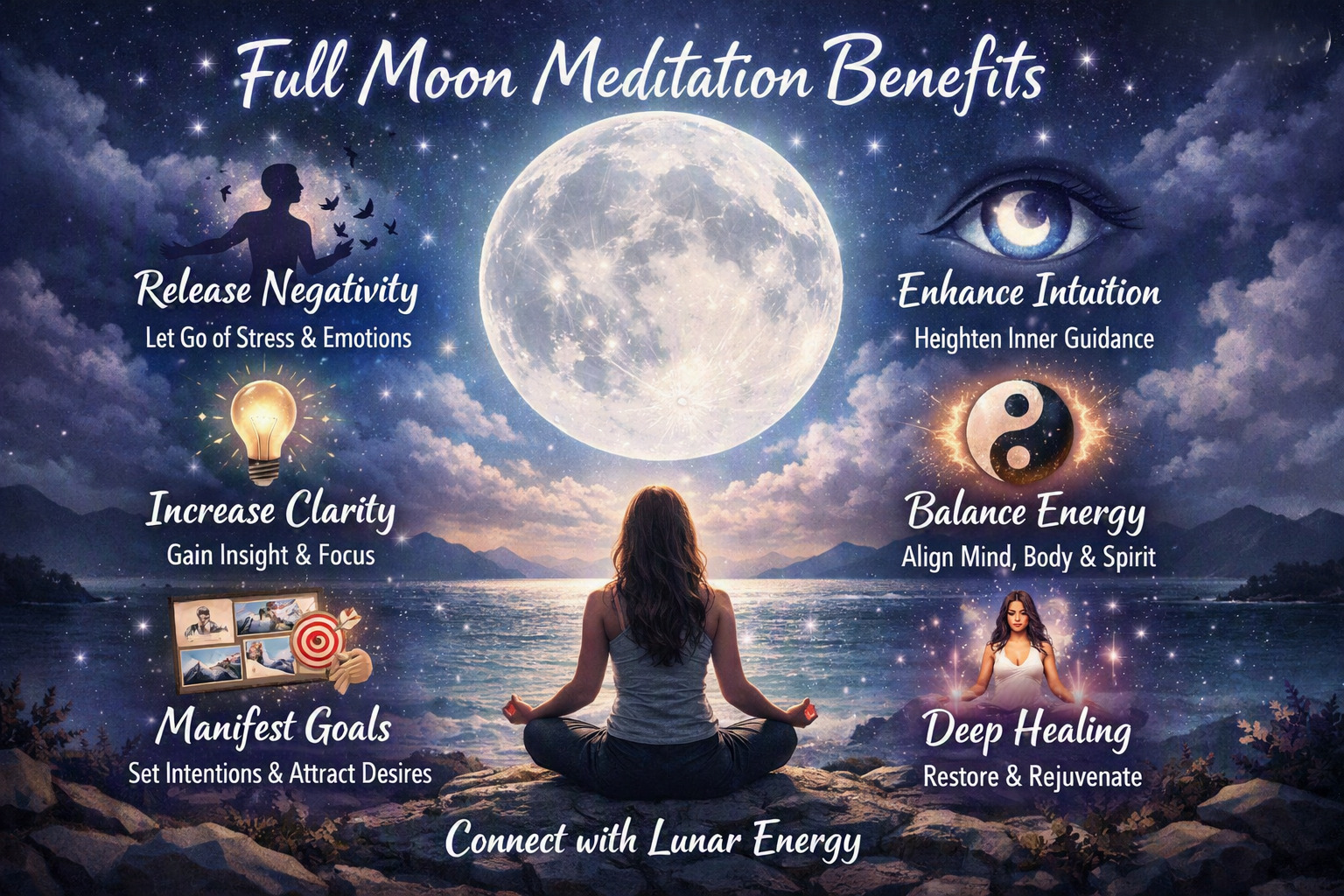
Practices like tarot card reading and angel card reading offer reflective tools for self-inquiry, functioning less as prediction and more as a structured way to access intuition and clarity around a specific question or decision. Workshops such as full moon meditation and archangel meditation create dedicated space for spiritual practice and community, which many people find harder to sustain alone.
Spiritual Health as an Ongoing Practice
Unlike a single fix, spiritual health tends to be maintained rather than “solved” — through regular reflection, ritual, or community practice, rather than a one-time realization.
Bringing All Five Pillars Together
None of these pillars work in isolation. A holistic wellness plan typically starts by identifying which pillar is most out of balance, then builds a protocol that addresses it directly while supporting the others. At Phoenix Soul-utions Holistic Wellness Center, Purrna Kraleti — a Yoga Prana Vidya (YPV) practitioner with over 12 years of experience — designs personalized combinations of mental health counseling, energy healing, and spiritual practices tailored to where each client actually needs support, not a one-size-fits-all program.
Frequently Asked Questions
1. What are the 5 pillars of holistic health? The five pillars are physical, mental, emotional, energetic, and spiritual health. Holistic wellness addresses all five as interconnected parts of one system, rather than treating the body in isolation.
2. Can you be physically fit but still unhealthy overall? Yes. Physical fitness doesn’t resolve chronic stress, unprocessed emotions, or a lack of purpose. Many physically active people still struggle with anxiety, low motivation, or a persistent sense of being stuck — signs that other pillars need attention.
3. What is energetic health, and why does it matter? Energetic health refers to the balance of the body’s subtle energy field. Practices like chakra balancing and crystal healing work at this layer, often addressing blockages before they manifest as physical symptoms or emotional exhaustion.
4. How do I know which pillar I need to focus on first? Common signs point to specific pillars: persistent fatigue often points to physical or energetic imbalance; racing thoughts point to mental health; unresolved anger or grief points to emotional health; and a lack of direction or meaning points to spiritual health. A consultation can help pinpoint the right starting point.
5. Is holistic health treatment a replacement for medical care? No. Holistic practices like energy healing, counseling, and spiritual work are complementary approaches that support overall wellbeing alongside — not instead of — appropriate medical or psychiatric care when needed.
Ready to Address All Five Pillars?
If you’ve been focusing on physical health alone and still feel off-balance, it may be time to look deeper. Book an appointment with Purrna Kraleti at Phoenix Soul-utions Holistic Wellness Center in Visakhapatnam, and start building a wellness plan that actually addresses the whole you — mind, body, energy, and spirit.