Have you ever felt stuck at a crossroads — unsure whether to leave that job, trust that relationship, or finally take that leap of faith? You’re not alone. Millions of people every year turn to tarot card reading not for magical predictions, but for something far more grounded: clarity, reflection, and a fresh perspective on life’s most pressing questions.
Tarot isn’t about surrendering your power to the cards. It’s about using ancient symbolic wisdom to illuminate what’s already within you. Whether you’re a curious first-timer or someone who has been quietly drawn to this practice for years, this guide will walk you through everything you need to know about tarot card reading — how it works, what the cards mean, how to prepare for a session, and how to choose a reader who truly resonates with you.
What Is Tarot Card Reading?
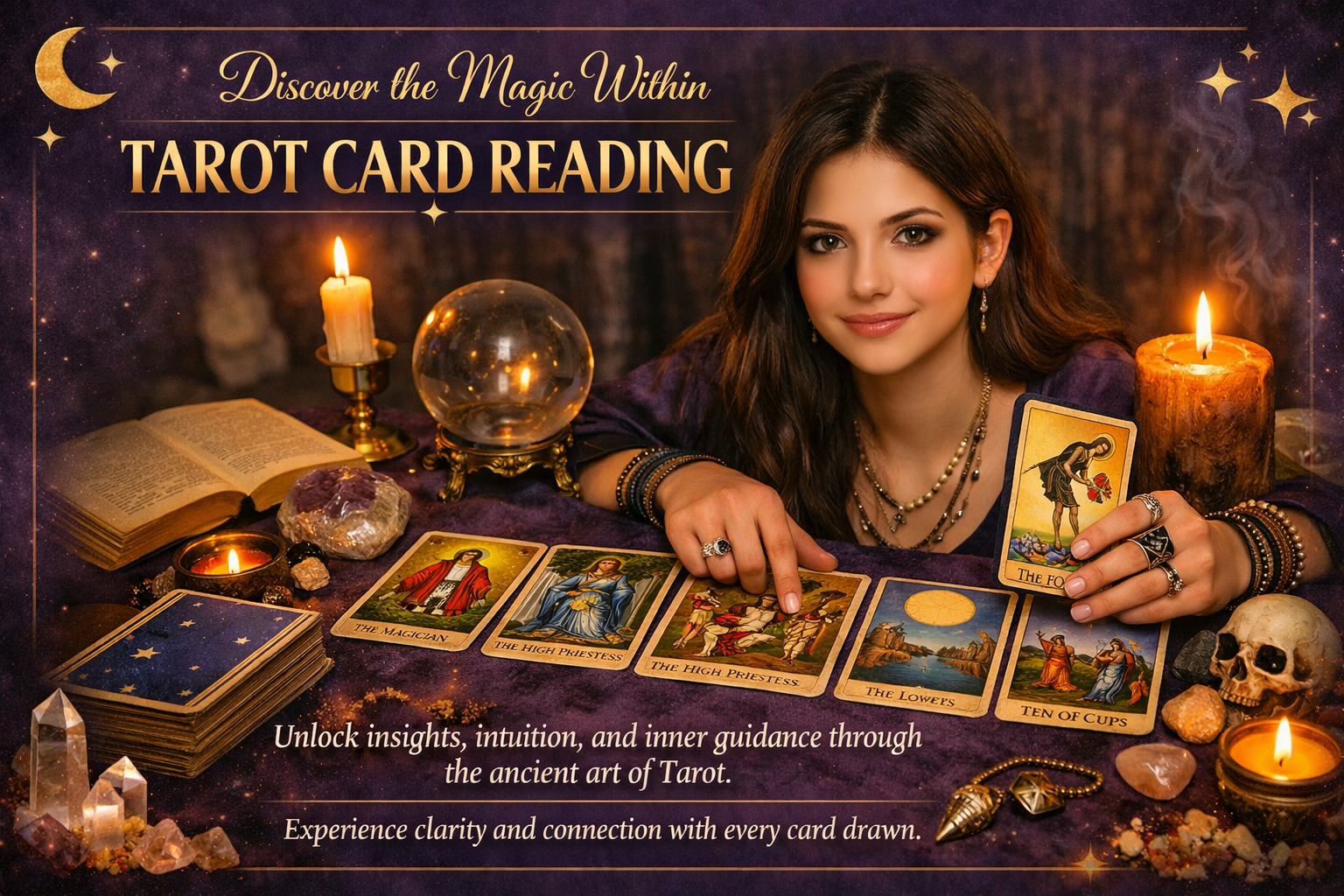
Tarot card reading is a practice rooted in centuries of symbolic and spiritual tradition, using a deck of 78 illustrated cards to explore the energies, patterns, and possibilities present in a person’s life. A trained tarot reader draws cards on your behalf (or guides you to draw them) and interprets the imagery, position, and combination of the cards in relation to your specific question or life situation.
The cards are not fortune-telling tools in the way pop culture often portrays them. They are more accurately described as mirrors — reflecting the subconscious mind, the emotional landscape of a situation, and the energetic possibilities that lie ahead. When you sit down for a tarot reading, you are engaging in a deeply personal form of introspection facilitated by an intuitive guide.
The practice has roots in 15th-century Europe, where tarot cards were originally used as playing cards before evolving into esoteric tools for divination and self-exploration. Today, tarot card reading is embraced across cultures as a powerful tool for personal growth, spiritual counseling, and decision-making support.
The Structure of a Tarot Deck: What You Need to Know
Understanding what’s in the deck helps you get more out of your reading. A standard tarot deck contains 78 cards divided into two main sections:
The Major Arcana (22 Cards)
These cards represent the big, overarching themes and forces in a person’s life — karmic lessons, spiritual turning points, and major life events. Cards like The Fool (new beginnings), The Lovers (choice and connection), The Tower (sudden change), and The World (completion and fulfillment) speak to the deeper currents running beneath daily life.
When a Major Arcana card appears in your reading, it signals that something significant is at work — energies that go beyond the day-to-day and carry a greater cosmic weight.
The Minor Arcana (56 Cards)
The Minor Arcana are divided into four suits — Wands, Cups, Swords, and Pentacles — each representing a different domain of life:
- Wands govern passion, ambition, creativity, and career drive
- Cups reflect emotions, relationships, intuition, and the inner world
- Swords deal with thought, conflict, communication, and mental clarity
- Pentacles relate to the material world — finances, health, work, and stability
Within each suit, cards run from Ace (pure potential) through 10, followed by four court cards (Page, Knight, Queen, King) that often represent people or personality aspects relevant to your situation.
How Does a Tarot Card Reading Actually Work?
Many people come to their first tarot session with a mix of curiosity and uncertainty. Here’s what the process typically looks like when working with a skilled reader:
Step 1 — Setting an Intention: Before any cards are drawn, you’ll be invited to focus on a question or area of life you’d like to explore. This doesn’t need to be perfectly worded. A simple intention — “I want clarity around my career path” or “Help me understand what’s happening in my relationship” — is enough.
Step 2 — Shuffling and Drawing: The reader shuffles the deck, often while holding your energy or intention in mind. Some readers invite you to participate in this process. Cards are then drawn and laid out in a specific pattern called a spread.
Step 3 — The Spread: Different spreads are used depending on the nature of the question. A three-card spread might explore past, present, and future. A Celtic Cross spread (10 cards) offers a comprehensive view of a situation. A relationship spread might map out the energies of two people and the dynamics between them.
Step 4 — Interpretation and Dialogue: The reader interprets each card’s meaning in context — considering the card itself, its position in the spread, how it relates to neighboring cards, and its relevance to your specific question. This is where intuition, experience, and empathy come together. A good reading is a two-way conversation, not a monologue.
Step 5 — Reflection and Action: At the end of the session, you leave with insights you can reflect on and, more importantly, act upon. The cards don’t make decisions for you — they help you make clearer ones yourself.
What Can Tarot Card Reading Help You With?
One of the most common misconceptions about tarot is that it’s only for people in crisis or those who believe in the supernatural. In truth, tarot card reading serves a wide range of purposes and is valuable for anyone willing to engage with it thoughtfully.
Love and Relationships
Questions of the heart are among the most common reasons people seek a tarot reading. Whether you’re navigating a new romance, trying to heal a troubled partnership, wondering if a past relationship deserves a second chance, or struggling to attract the right person — tarot can offer profound insights into the emotional patterns, energetic blocks, and relational dynamics at play.
A skilled relationship reading won’t tell you “this person is your soulmate” or “leave them.” What it will do is illuminate the energies at work in the connection, help you understand your own needs and patterns, and guide you toward greater clarity about what you truly want from love.
At Phoenix Soul-utions Holistic Wellness Center, relationship tarot readings are offered as a dedicated service — designed to help you explore romantic, familial, and platonic connections with greater depth and compassion.
Career and Professional Life
Feeling stuck in your career? Wondering whether to accept that job offer, start that business, or make a major professional pivot? Career-focused tarot readings can help you see your professional situation from a higher vantage point. They often reveal hidden strengths, unacknowledged fears, and opportunities that haven’t yet come into conscious awareness.
The Pentacles and Wands suits are particularly active in career readings, speaking to your relationship with work, ambition, financial security, and creative fulfillment. A career reading doesn’t predict your exact job title in five years — but it can help you align your choices with your deeper values and purpose.
Personal Growth and Self-Discovery
Some of the most transformative tarot readings have nothing to do with a specific external question. Instead, they focus on you — your patterns, your shadow side, your untapped potential, and the next steps in your personal evolution.
This kind of reading is particularly valuable if you feel a vague sense of dissatisfaction, like you’re meant for something more but can’t quite see what. The cards have a way of naming what’s been living in the background of your consciousness, gently bringing it to light.
Spiritual Guidance and Soul Purpose
For those on a conscious spiritual path, tarot card reading serves as a powerful complement to practices like meditation, energy healing, and spiritual counseling. It can offer insight into your soul’s journey, the karmic patterns you’re working through in this lifetime, and the guidance available to you from your higher self and spiritual guides.
At Phoenix Soul-utions, tarot is offered alongside spiritual counseling, chakra healing, and angel card reading — creating a comprehensive, integrative approach to spiritual wellbeing.
Decision-Making Support
One of the most practical applications of tarot is decision-making. When you’re facing a major choice — whether to move cities, end a business partnership, invest in a property, or commit to a new direction — a tarot reading can help you assess the energies around each option, identify potential challenges, and connect with your own deeper knowing.
This is not about outsourcing your decision to the cards. It’s about using the cards as a structured way to access the intuitive wisdom you already carry within you.
Common Tarot Spreads and What They Reveal
Different spreads unlock different layers of insight. Here are some of the most widely used layouts and when to use them:
The Single Card Pull is used for daily guidance or a quick snapshot of energy around a specific question. Simple, but often surprisingly precise.
The Three-Card Spread offers a narrative across time — often read as Past / Present / Future, or as Situation / Action / Outcome. This is a great starting point for beginners.
The Celtic Cross is a 10-card spread considered the gold standard for comprehensive readings. It covers the current situation, hidden influences, past foundations, future possibilities, hopes and fears, and the likely outcome.
The Horseshoe Spread examines a situation from seven angles — past, present, hidden influences, obstacles, external influences, the best course of action, and the probable outcome.
Custom Spreads designed by experienced readers can be tailored to highly specific questions — a business decision, a health concern, a family conflict, or a spiritual inquiry. This is where a truly skilled reader shines.
What Makes a Great Tarot Reader?
Not all tarot readings are created equal. The quality of your experience depends enormously on the skill, integrity, and intuitive sensitivity of the reader you choose. Here’s what to look for:
Experience and Training: A good reader has spent years working with the cards — in formal study, personal practice, and client sessions. They understand not just the traditional meanings of the cards but how to read them in combination and context.
Empathy and Presence: Tarot reading is fundamentally a human interaction. The best readers are deeply present, genuinely caring, and skilled at creating a safe space where you feel comfortable being honest about what’s really going on in your life.
Integrity: A trustworthy reader will never use fear or manufactured urgency to pressure you into more sessions or special “cures.” They will offer honest, balanced insights — acknowledging both challenges and possibilities — and always emphasize your own agency and free will.
Holistic Understanding: The most impactful readers situate tarot within a broader understanding of wellbeing — emotional, psychological, energetic, and spiritual. At Phoenix Soul-utions, tarot card reading is practiced by a holistic wellness expert with over 12 years of experience across counseling, energy healing, and spiritual guidance.
Clear Communication: Insights are only useful if they’re communicated in a way you can actually understand and act upon. A great reader translates the symbolic language of the cards into practical, relevant guidance for your real life.
Tarot Card Reading vs. Other Divination Practices
Many people wonder how tarot compares to other tools like angel card reading, numerology, or astrology. While all of these practices can offer valuable guidance, they work in different ways and serve different purposes.
Tarot vs. Angel Card Reading: Angel cards carry a softer, more overtly spiritual energy — they are typically oriented toward comfort, encouragement, and divine guidance. Tarot, while equally spiritual, tends to offer more nuanced and sometimes more challenging insights. It doesn’t shy away from difficult truths.
Tarot vs. Astrology: Astrology maps the energetic landscape of your life through the positions of celestial bodies at birth and over time. Tarot works more directly with your present-moment energies and specific questions. They complement each other beautifully, but tarot tends to be more immediately applicable to day-to-day situations.
Tarot vs. Numerology: Numerology uses the vibrational meaning of numbers to interpret personality, life cycles, and timing. Tarot engages a richer symbolic vocabulary and allows for a more conversational, responsive exploration of your situation.
How to Prepare for Your First Tarot Card Reading
If you’ve never had a tarot reading before, a little preparation can make the experience significantly more meaningful. Here’s how to get ready:
Come with an Open Mind: You don’t need to be a true believer for tarot to be valuable. Simple openness — a willingness to consider what the cards reflect — is enough.
Identify Your Core Question: Think about what you most want clarity on. You can have multiple questions, but identifying the one that feels most pressing will help focus the reading.
Write Down Your Question: There’s something about putting a question in writing that clarifies it. You don’t need to share exactly what you’ve written — the act of writing itself helps crystallize your intention.
Be Honest: The more honestly you engage with the reading — acknowledging what resonates, asking follow-up questions, sharing what’s really happening in your situation — the more valuable the insights will be.
Release Attachment to Specific Answers: Coming in expecting a particular outcome can limit what you receive. The most valuable readings often illuminate something you hadn’t considered, not just confirm what you already think.
Journal Afterward: Keep a record of the cards that appeared and the insights that emerged. Tarot often speaks in layers — things that seem puzzling immediately after a reading can make perfect sense days or weeks later.
FAQ
1. Is tarot card reading accurate?
Accuracy in tarot is a nuanced concept. Tarot doesn’t predict the future with certainty — the future is not fixed, and your choices play a powerful role in how events unfold. What tarot does with remarkable consistency is accurately reflect the energies, patterns, and possibilities present in your current situation. Most people find that a skilled reading resonates deeply with what they’re truly experiencing, even when they haven’t verbalized it. The degree of insight depends heavily on the quality of the reader, the depth of your engagement, and your own openness to the process.
2. Do I have to believe in tarot for it to work?
You don’t need to hold any particular spiritual belief for a tarot reading to be valuable. Many people approach it as a form of structured reflection — similar to therapy or journaling — rather than a metaphysical practice. The cards work as a projective tool: they invite you to engage with symbolic imagery in a way that draws out your own subconscious awareness. A thoughtful reading can be meaningful regardless of your belief system.
3. Can tarot tell me exactly what will happen in the future?
Tarot speaks to possibilities, tendencies, and likely trajectories — not fixed, predetermined outcomes. The cards illuminate the energies at work in your present situation and show you where those energies are likely to lead if things continue as they are. Importantly, this gives you the power to make informed choices and shift direction if needed. Think of it as a weather forecast rather than a locked-in fate.
4. How often should I get a tarot reading?
There’s no one-size-fits-all answer. Some people find monthly readings helpful for staying connected to their growth and direction. Others come for readings at significant crossroads — before a major decision, during a period of transition, or when they feel stuck. Coming too frequently (say, multiple readings on the same question in a short period) can create confusion rather than clarity. A good reader will help you understand the right rhythm for your needs.
5. What is the difference between tarot and psychic reading?
Tarot is a structured practice using a specific set of symbolic cards, while psychic reading is a broader term for any form of intuitive perception. Not all tarot readers consider themselves psychic, and not all psychic readers use cards. Tarot provides a shared visual and symbolic framework that makes the reading process transparent and grounded. At Phoenix Soul-utions, tarot readings are grounded in both symbolic knowledge and intuitive sensitivity — combined with the holistic wellness expertise of a trained counselor and energy healer.
Tarot Card Reading at Phoenix Soul-utions, Visakhapatnam
If you’re in Visakhapatnam or anywhere in India and looking for a tarot card reading that goes beyond the surface, Phoenix Soul-utions Holistic Wellness Center offers a genuinely transformative experience.
Founded by Purrna Kraleti — a psychotherapist, energy healer, and spiritual counselor with over 12 years of experience — Phoenix Soul-utions integrates tarot card reading into a broader framework of holistic wellness. This means your reading isn’t just an isolated event. It’s situated within a deep understanding of mental health, energy healing, and spiritual growth.
The center offers four types of tarot reading sessions:
Personal Readings for individual clarity — uncovering hidden truths, illuminating pathways, and empowering you to make informed decisions about your own life journey.
Relationship Readings to explore the dynamics of romantic, familial, or platonic connections — gaining clarity on communication, compatibility, and the energies at play between people.
Career Readings to navigate professional choices, opportunities, challenges, and potential growth with greater confidence and direction.
Spiritual Readings to connect with your inner wisdom, higher self, and spiritual guides — perfect for those on a conscious path of self-discovery and soul-level transformation.
The Science and Psychology Behind Tarot’s Effectiveness
For those who prefer a rational lens, it’s worth understanding why tarot works even from a psychological standpoint. The practice draws on several well-established principles:
Projection: The rich, archetypal imagery on tarot cards activates the subconscious mind’s tendency to project meaning. When you look at a card and immediately feel something — recognition, resistance, attraction — that reaction is telling you something real about your inner world.
Narrative Therapy: Psychologically, tarot works similarly to narrative therapy — helping people step back from their immediate experience and see it as part of a larger story that they have agency in shaping.
Structured Reflection: Many people find it genuinely difficult to think clearly about their own problems. Tarot provides a structured, external framework for that reflection, making it easier to access insights that might otherwise remain buried.
Archetypal Psychology: Carl Jung’s concept of archetypes — universal patterns of human experience — maps directly onto the Major Arcana of tarot. Engaging with these archetypes can facilitate a depth of self-understanding that more linear forms of analysis sometimes can’t reach.
This psychological dimension is one reason why tarot pairs so effectively with counseling and therapy — and why practitioners like Purrna Kraleti, who bring both therapeutic and intuitive training, offer an experience that’s truly integrative.
Final Thoughts: Tarot as a Tool for Living More Consciously
Tarot card reading, at its best, is not about finding someone to tell you what to do or what will happen. It’s about slowing down in a world that moves too fast, creating space for the wisdom that already lives within you, and gaining the clarity to move forward with intention and confidence.
Whether you’re facing a specific challenge, standing at a crossroads, walking a spiritual path, or simply feeling called to understand yourself and your life more deeply — a thoughtful tarot reading can be one of the most meaningful investments you make in your own wellbeing.
If you’re ready to experience tarot card reading in a safe, professional, and deeply compassionate space, Phoenix Soul-utions Holistic Wellness Center in Visakhapatnam is ready to welcome you.
Book your tarot card reading session today at purrnakraleti.in and take the first step toward the clarity, direction, and inner peace you’ve been seeking.