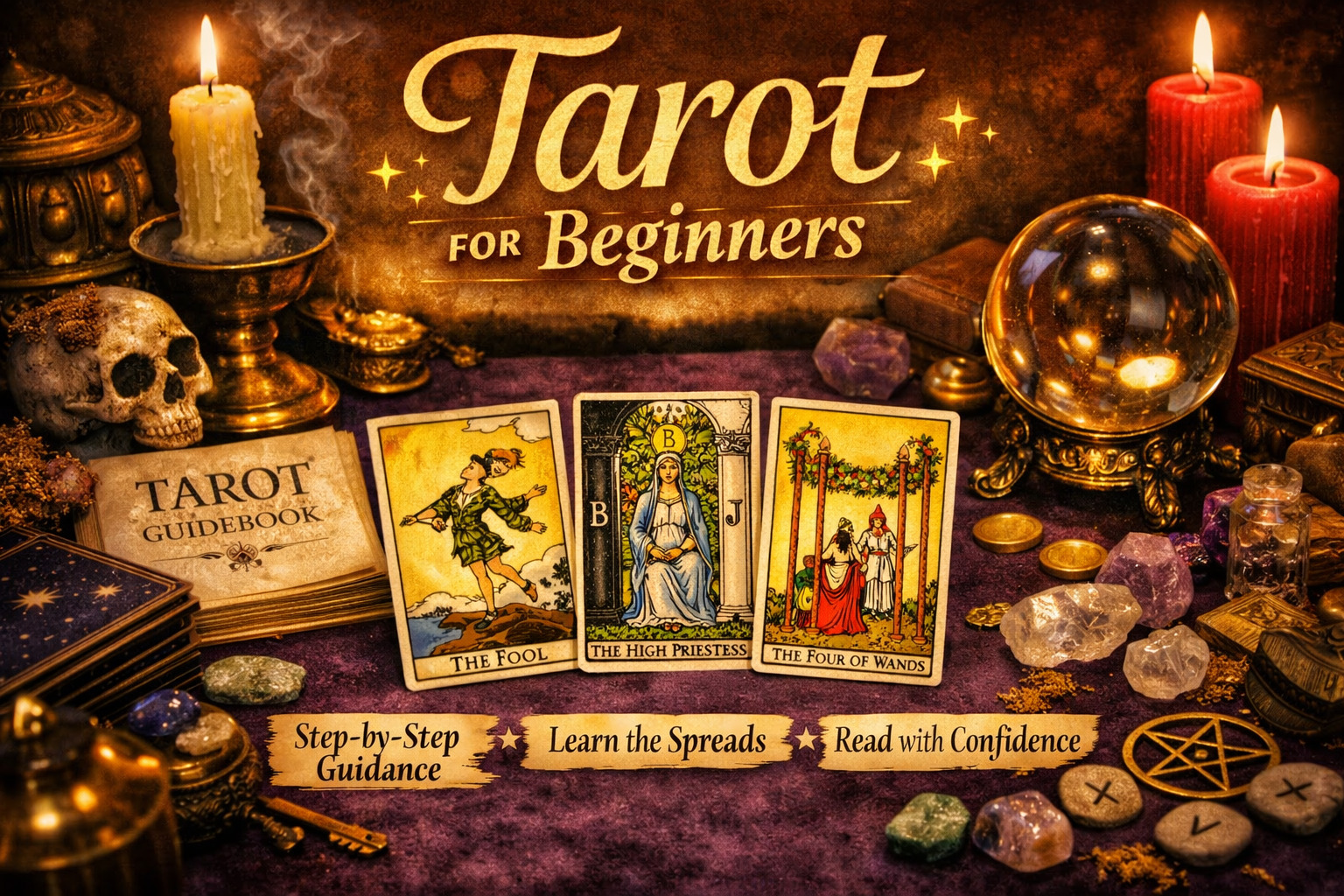
If you’re new to tarot, here’s the short answer: you don’t need special “gifts,” years of practice, or a mystical background to start. You need a deck, an open mind, and a simple process — shuffle, draw, and reflect on what the cards bring up for you. Tarot isn’t about predicting a fixed future; it’s a tool for self-reflection that helps you see your situation more clearly. In this guide, you’ll learn exactly what tarot is, how the deck is structured, and the step-by-step process to do your very first reading with confidence.
So you’ve got a deck of tarot cards sitting on your shelf, or maybe you’re still deciding which one to buy, and you’re wondering where on earth to even begin. Here’s the short answer: start with the Rider-Waite-Smith deck, learn the two arcana groups first, practice with single-card daily pulls, and let your intuition catch up to the “textbook” meanings over time. That’s the whole game in a nutshell, but the real magic (pun intended) is in how you build the habit. This guide walks you through every piece of that process, from picking your first deck to reading a full spread without freezing up halfway through.
Tarot has quietly become one of the most talked-about self-reflection tools of the decade. Industry researchers estimate the global tarot card market sits somewhere around $1.3 billion, with projections pushing it toward $2.1 billion by 2030, and a huge share of that growth is coming from people exactly like you: curious beginners who found tarot through a friend, a bookstore aisle, or a late-night scroll session. Roughly 22% of US adults say they’ve consulted a psychic or tarot reader at some point, and women aged 18 to 34 make up the largest single group of tarot card buyers. Interestingly, a large chunk of younger users, close to 40% of Millennials, treat tarot less like fortune-telling and more like a tool for quiet self-reflection. That shift matters because it changes what “learning tarot” actually means for a beginner in 2026: this isn’t about predicting the future with certainty, it’s about building a structured way to ask yourself better questions.
What Is Tarot, Really?
Before picking up a deck, it helps to understand what tarot actually does. At its core, tarot is a 78-card system of imagery and symbolism that reflects human experiences — love, conflict, growth, loss, and change. When you draw a card, you’re not being told a fixed fate. You’re being handed a mirror that prompts you to think about your situation from a new angle.
A Brief History
Tarot cards originated in 15th-century Italy as a card game before evolving, centuries later, into a tool for divination and self-inquiry. The most widely used deck today, the Rider-Waite-Smith deck, was published in 1909 and set the visual language most modern decks still follow — rich, symbolic imagery that even beginners can learn to read intuitively.
Tarot Isn’t Fortune-Telling — It’s a Mirror
One of the biggest misconceptions beginners carry is that tarot “predicts the future” like a script already written. In practice, most experienced readers treat tarot as a reflective tool — it highlights patterns, blind spots, and possibilities so you can make more conscious choices. This reframing takes the pressure off. You’re not trying to be “psychic.” You’re learning to notice what a symbol brings up in you.
Why People Are Turning to Tarot Right Now
There’s a reason tarot decks keep selling out and TikTok tarot content keeps racking up billions of views. Life feels unpredictable, and tarot offers something rare: a slow, tactile ritual in a world obsessed with speed. Shuffling a deck, laying out cards, and sitting with the imagery forces you to pause, and that pause is often the point. Some therapists have even started using tarot as an ice-breaker in sessions, not because the cards hold mystical power over your future, but because the imagery gives people a low-pressure way to talk about feelings they’d otherwise struggle to name. Think of tarot less like a crystal ball and more like a very elaborate journaling prompt generator. You’re not asking the cards to hand you an answer; you’re asking them to help you notice what you already know but haven’t said out loud yet.
There’s also a practical, almost gamified appeal to it. Learning 78 cards feels like leveling up a skill, similar to learning a new language or picking up an instrument, and that sense of steady progress is deeply satisfying. Unlike a lot of “wellness” trends that fizzle out after a month, tarot rewards consistency in a way that keeps beginners coming back. Every single card you learn compounds on the last one, since the suits, numbers, and archetypes all echo each other, so the learning curve actually gets easier the further you go, not harder.
What You Need to Start Reading Tarot
You don’t need an elaborate setup. A few basics are enough to begin.
Choosing Your First Deck
For your first deck, pick one with clear, illustrated scenes on every card — not just the Major Arcana. The Rider-Waite-Smith deck (or modern versions inspired by it) is the standard beginner recommendation because its imagery is consistent and easy to interpret intuitively, even before you memorize meanings. Choose a deck whose artwork genuinely resonates with you; you’ll read more accurately with cards you feel connected to.
Setting Up Your Reading Space
You don’t need candles or incense, though many readers enjoy them. What matters more is a quiet moment where you won’t be interrupted. Sit somewhere comfortable, keep a notebook nearby, and give yourself five to ten uninterrupted minutes. Consistency in your practice matters more than atmosphere.
Understanding the Tarot Deck Structure
Every tarot deck has 78 cards split into two parts. Understanding this structure makes the rest of your learning much faster.
The Major Arcana
The Major Arcana is made up of 22 cards, from The Fool to The World, representing major life themes and turning points — new beginnings, endings, transformation, and lessons. When a Major Arcana card appears in a reading, it usually points to something significant happening in your life right now, not a small day-to-day detail.
The Minor Arcana and Four Suits
The remaining 56 cards make up the Minor Arcana, divided into four suits, each tied to a different area of life:
- Cups – emotions, relationships, intuition
- Pentacles – money, career, physical health
- Swords – thoughts, communication, conflict
- Wands – passion, creativity, ambition
Each suit runs from Ace through 10, followed by four court cards (Page, Knight, Queen, King) representing people or personality traits relevant to your question.
Step-by-Step: How to Do Your First Tarot Reading
Here’s the process most beginners can follow from their very first sitting.
Step 1: Ground and Set an Intention
Take a few slow breaths before you touch the deck. Ask yourself what you genuinely want clarity on — a relationship, a decision, or simply “what do I need to know today?” A clear intention gives your reading direction.
Step 2: Shuffle and Ask Your Question
Shuffle the deck while holding your question in mind. There’s no “correct” shuffling method — riffle, overhand, or simply spread the cards on a table and mix them with your hands. Stop when it feels right.
Step 3: Draw and Lay Out Your Cards
Draw the number of cards your chosen spread requires (start with one or three — more on this below) and lay them face up in order.
Step 4: Interpret What You See
Look at the imagery before reaching for a guidebook. What’s your first instinct? Then check the card’s traditional meaning and notice where it overlaps — or contrasts — with your gut read. Over time, your intuitive read and the traditional meanings will start to align naturally.
Step 5: Reflect and Journal
Write down what came up: the cards you drew, your first impressions, and how they relate to your question. Reviewing past readings is one of the fastest ways beginners build genuine tarot fluency.
Simple Beginner Spreads to Practice
You don’t need a complex 10-card spread to get value from tarot. Start small.
The One-Card Daily Draw
Each morning, draw a single card and ask, “What do I need to focus on today?” This is the easiest way to build familiarity with the deck without feeling overwhelmed.
The Three-Card Spread (Past, Present, Future)
Draw three cards left to right, representing your past, present, and future in relation to your question. This spread gives you enough context to see a situation’s arc without requiring advanced interpretation skills.
Common Beginner Mistakes to Avoid
- Memorizing meanings before trusting intuition. Look at the image first; the guidebook meaning second.
- Reading only for “yes or no” answers. Tarot works better with open-ended questions like “what should I be aware of?”
- Skipping the journal. Without notes, it’s hard to see how your interpretation skills are improving.
- Reading the same question repeatedly. Asking the same thing over and over across multiple sittings tends to create confusing, contradictory results rather than clarity.
When to Read for Yourself vs. Seeing a Professional
Self-practice is great for daily reflection and building your own intuition. But there are moments — a major life decision, a recurring pattern you can’t seem to shift, or a reading that leaves you more confused than clear — where an experienced reader adds real value. A professional reader can hold space for you without the emotional closeness that sometimes clouds a self-reading, and can guide you through more advanced spreads once you’re ready to go deeper.
If you’d like to see how a full professional reading unfolds, our detailed Tarot Card Reading: The Complete Guide walks through what to expect in a session.
Frequently Asked Questions
1. Do I need to be psychic to read tarot? No. Tarot reading is a learnable skill built on symbolism, reflection, and practice — not an innate gift. Anyone can learn to read tarot with consistent practice.
2. Can I read tarot for myself, or do I need someone else to do it? You can absolutely read for yourself, especially for daily reflection. Some readers find it harder to stay objective about deeply personal situations, which is when a second, outside perspective can help.
3. How many cards should a beginner start with? Start with a one-card daily draw, then move to a three-card spread once you’re comfortable. Larger spreads are easier to learn once you understand basic card meanings.
4. Does a “bad” card like Death or The Tower mean something terrible will happen? Not necessarily. Cards like Death usually represent transformation and endings that make way for something new, while The Tower often signals sudden but necessary change. Context from the surrounding cards matters more than any single card in isolation.
5. How long does it take to get good at reading tarot? Most beginners feel comfortable with basic readings within a few weeks of daily practice. Deeper fluency, where you read intuitively without constantly checking a guidebook, tends to develop over several months of consistent journaling and reflection.
Ready to Go Deeper Than Self-Study?
Tarot is a powerful tool for self-reflection, but a guided reading can offer clarity that’s hard to reach alone — especially during major life transitions. At Phoenix Soul-utions, we offer personalized Tarot Card Reading sessions designed to help you gain clarity on relationships, career, and personal growth.
Book your tarot reading session today and take the next step on your journey to clarity.