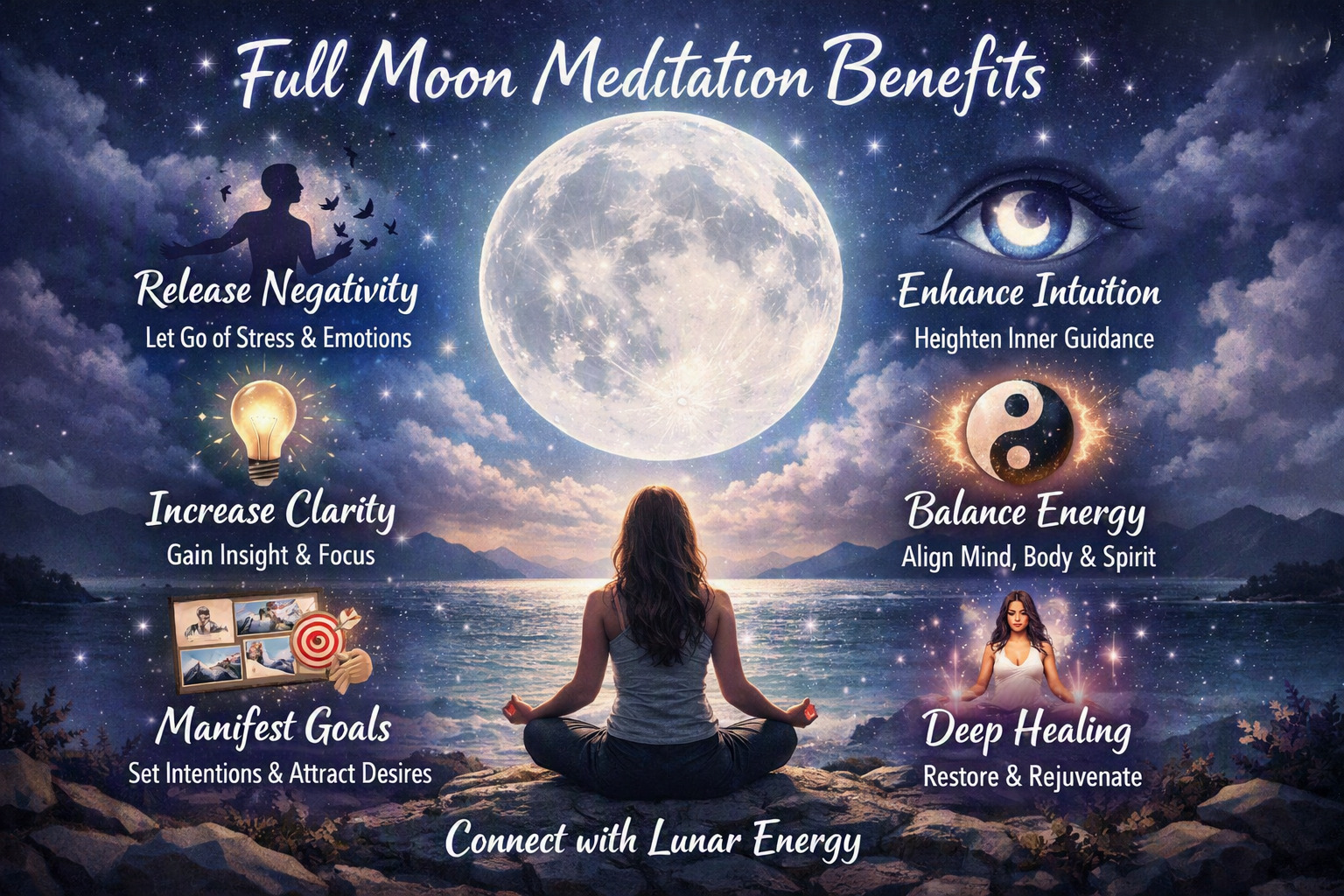

During the full moon phase, Full Moon Meditation is a focused practice of stillness and intention-setting. It is done during the full moon phase, when the moon’s energy is believed to peak sensitivity and awareness. Practiced consistently, it helps you release what no longer serves you, process buried emotions, and align your intentions with clarity. This guide walks you through the science, the spiritual meaning, and a simple practice you can start tonight.
What Is Full Moon Meditation?
Full Moon Meditation is a mindfulness and energy-clearing practice timed to the night of the full moon, when the moon appears completely illuminated from Earth. In many spiritual and energy-healing traditions, the full moon represents culmination — the point where intentions set during the new moon come to fruition, and where emotional or energetic blocks rise to the surface to be released.
The Spiritual Meaning of the Full Moon
Across cultures, the full moon has long been associated with heightened emotion, intuition, and completion. Practitioners of energy healing often describe this phase as a “mirror moment” — a time when unresolved feelings, old patterns, or stagnant energy become easier to notice and release, rather than push down.
How It Differs from New Moon Meditation
New Moon Meditation is typically about planting seeds — setting fresh intentions in the darkness before the lunar cycle begins again. Full Moon Meditation works in the opposite direction: it’s about letting go, gratitude, and closing loops. Together, the two phases form a natural rhythm of intention and release that many people build their self-care practice around.
Why the Moon’s Cycle Affects Emotional Energy
Skeptics and believers alike often ask whether the moon truly influences mood and energy. While large-scale scientific studies remain inconclusive on the moon’s direct effect on human biology, many people consistently report disrupted sleep, vivid dreams, or heightened emotional sensitivity around the full moon.
The Science Perspective
Some researchers point to subtle links between lunar brightness, sleep cycles, and circadian rhythm. Even without definitive proof, the placebo-adjacent power of ritual is well documented. When you dedicate time to reflection on a specific, recurring date, you’re more likely to actually follow through on emotional processing than if you wait for “whenever you feel like it.”
The Energy Healing Perspective
In holistic and energy-healing frameworks, the moon is seen as an amplifier rather than a cause. It doesn’t create emotions from nothing — it intensifies what’s already present in your energy field, making it an ideal time for release work, chakra balancing, and aura clearing.
Benefits of Practicing Full Moon Meditation
A consistent full moon practice offers benefits that extend beyond a single night of ritual.
Emotional Release and Closure
Sitting with difficult emotions during the full moon — rather than avoiding them — allows you to name, process, and consciously let go of resentment, grief, or anxiety that may have built up over the month.
Improved Sleep and Calm
Many practitioners report that a short meditation before a full moon night actually improves sleep quality, countering the restlessness the moon phase is known to bring.
Deeper Self-Awareness
Because the full moon tends to surface what’s hidden, meditating during this phase often brings clarity about patterns, relationships, or decisions you’ve been avoiding.
Stronger Manifestation Alignment
If you set intentions during the new moon, the full moon becomes a natural checkpoint — a chance to review what’s working, release what isn’t, and realign your energy toward your goals.
Energetic and Physical Reset
Many people describe a lighter, “decluttered” feeling after a full moon session — similar to how a good declutter of a physical space can free up mental bandwidth. Energetically, this is often framed as clearing stagnant energy from the aura, which can leave you feeling more settled the next day.
A Sense of Community and Ritual
Whether practiced solo or in a group circle, tying reflection to a recurring lunar rhythm gives you a built-in check-in point every month. Many people find that showing up to a group full moon session — even quietly, without speaking — creates a sense of shared support that solo journaling doesn’t fully replicate.
How to Practice Full Moon Meditation: A Step-by-Step Guide
You don’t need special training to begin. Here’s a simple, beginner-friendly structure.
Step 1: Prepare Your Space
Dim the lights, light a candle, and if you have one, sit near a window where moonlight can reach you. Some people like to place healing crystals nearby to support the practice — rose quartz for emotional release, or clear quartz for clarity.
Step 2: Ground and Breathe
Sit comfortably, close your eyes, and take five slow, deep breaths. Let your shoulders drop and your jaw unclench. Grounding first prevents the practice from feeling overwhelming, especially if strong emotions surface.
Step 3: Reflect and Release
Ask yourself: What am I ready to let go of this month? This could be a grudge, a fear, a habit, or a belief that’s no longer true. Silently or on paper, name it — then visualize it dissolving into moonlight.
Step 4: Gratitude and Realignment
Shift your attention to what you’re grateful for from the past cycle. Gratitude re-anchors your energy in the present before you set your next intention.
Step 5: Close with Intention
End by stating one clear, positive intention for the coming month. Some practitioners like to write this down and keep it somewhere visible until the next full moon.
Step 6: Ground Back Into Your Body
Before opening your eyes, take three more slow breaths and gently wiggle your fingers and toes. This brings your awareness fully back into the present moment, especially important if the session brought up strong emotion.
Full Moon Meditation Techniques You Can Try
Beyond the basic seated practice, there are several ritual formats you can layer in depending on what resonates with you.
The Release Journaling Method
Write down everything you want to let go of on a piece of paper — old grudges, fears, limiting beliefs. Read it back once, then either tear it up or safely burn it (outdoors, with care) as a symbolic act of release.
Mantra and Chanting
Repeating a simple phrase like “I release what no longer serves me” or a traditional mantra during meditation can help anchor your focus and deepen the emotional release, especially for beginners who find silent sitting difficult.
Crystal Grid Ritual
Arrange crystals such as moonstone, selenite, or rose quartz in a simple pattern around your meditation space. Many practitioners believe this amplifies the lunar energy and supports the emotional themes of the session.
Sound Healing with Singing Bowls
Playing a Tibetan or crystal singing bowl before or after your meditation can help shift your nervous system into a calmer state, making it easier to sit with whatever comes up during the practice.
Full Moon Bath Ritual
Adding bath salts infused with calming herbs to a warm bath before meditating is a gentle way to physically relax the body, especially on nights when emotional tension feels stuck in the shoulders or chest.
How Full Moon Meditation Supports Specific Life Areas
Relationships and Emotional Healing
Full moon sessions are often used to process unresolved feelings toward family members, partners, or friends — not necessarily to confront them, but to release the emotional charge you’re still carrying internally.
Career and Manifestation
If you set career or business intentions during the new moon, the full moon is the natural point to review progress, release self-doubt, and recommit to the goal with renewed clarity.
Physical Health and Energy Levels
Many people notice that clearing emotional tension through full moon practice also eases physical tension — tight shoulders, shallow breathing, or disrupted sleep — since the body and mind are closely linked in holistic wellness frameworks.
How Often Should You Practice Full Moon Meditation?
At minimum, once a month on or near the exact full moon date is enough to build a meaningful rhythm. Some practitioners extend the window to the day before and the day after, since lunar energy is felt as building up to and tapering off from the peak. If you’re working through a specific emotional pattern, you can meditate more frequently, but the monthly full moon session works well as an anchor point you return to no matter how busy life gets.
Full Moon Names and Seasonal Themes
Many cultures assign a unique name to each month’s full moon, often tied to seasonal changes in nature. While the astronomy is the same every month, some practitioners like to let the seasonal name guide their intention-setting theme for that particular session.
Spring and Summer Moons
Names like the Pink Moon (April) or Strawberry Moon (June) are often linked to growth and abundance themes — useful anchor points for intentions around new beginnings, creativity, or nurturing relationships.
Autumn and Winter Moons
The Harvest Moon (September/October) and Cold Moon (December) tend to carry themes of reflection, gratitude, and closing chapters — fitting for release work around endings, letting go of the past year, or preparing for rest.
Using Seasonal Themes in Your Practice
You don’t need to follow these themes strictly. They’re simply a helpful prompt if you’re ever unsure what to focus on during a session — a gentle nudge from the season itself rather than a rule to follow.
Full Moon Meditation and Emotional Sensitivity: A Word of Caution
Because the full moon phase can intensify emotions, it’s worth approaching the practice mindfully if you’re currently navigating anxiety, grief, or trauma.
When to Go Gently
If you know a topic is emotionally heavy, it’s fine to keep the session shorter, focus more on grounding and gratitude, and save deeper release work for a time when you feel more resourced — or for a guided session with professional support.
When to Seek Support
If a full moon meditation brings up emotions that feel bigger than you can process alone, that’s a signal to reach out — whether to a trusted friend, a counselor, or an energy healer trained to hold space for deeper emotional work. Self-guided meditation is a wellness tool, not a replacement for professional mental health care when it’s needed.
Building a Simple Full Moon Ritual Kit at Home
If you’d like to make the practice feel more intentional, a few simple items can turn a quick meditation into a proper ritual:
- A candle for focus and ambiance
- A journal or notebook for release writing and gratitude notes
- One or two crystals that resonate with your current intention
- A soft blanket or cushion for physical comfort
- Optional: a singing bowl, incense, or calming essential oil
None of these are required — but having a small, dedicated kit can make it easier to actually follow through each month, since the ritual becomes something you look forward to rather than another task on your list.
Common Mistakes to Avoid
Forcing the Emotion
Full Moon Meditation isn’t about manufacturing a breakthrough. If nothing comes up, that’s fine — simply sitting in stillness is still valuable.
Skipping Grounding
Diving straight into emotional release without grounding first can leave you feeling more unsettled rather than calm. Always start with breath.
Doing It Only Once
Like most practices, the benefits of Full Moon Meditation compound with consistency. A single session may feel pleasant, but a monthly rhythm is where lasting change tends to show up.
Ignoring Physical Discomfort
If sitting cross-legged for 20 minutes causes pain, it will distract you from the emotional work. Use a cushion, chair, or lie down if needed — comfort supports depth, not the other way around.
Guided vs. Solo Full Moon Meditation
Meditating alone gives you flexibility and privacy, but many people find that a guided session — led by an experienced energy healer — helps them go deeper, especially when working through grief, stuck patterns, or major life transitions. Group full moon circles also add a shared energy that many practitioners describe as amplifying the release process. If you’re new to the practice or want deeper support, joining a guided Full Moon Meditation session can offer structure, community, and expert facilitation that’s harder to replicate alone.
FAQs
1. How long should a Full Moon Meditation session last?
Anywhere from 10 to 30 minutes is enough. Beginners often start with 10–15 minutes and extend the duration as the practice becomes familiar.
2. Can I do Full Moon Meditation if I’ve never meditated before?
Yes. The practice is beginner-friendly and doesn’t require prior meditation experience — following simple breath and reflection steps is enough to begin.
3. What’s the best time of day to meditate during the full moon?
Evening or night, ideally within 24 hours before or after the exact full moon, tends to align best with the peak lunar energy most practitioners work with.
4. Do I need crystals or special tools to practice?
No, they’re optional. Crystals, candles, or journaling can enhance the ritual, but the core practice only requires quiet space and focused breath.
5. What if I feel emotionally overwhelmed during the meditation?
Pause, breathe deeply, and ground yourself by feeling your feet on the floor. If emotions feel too intense to process alone, working with a trained energy healer or counselor can provide safe support.
6. Can Full Moon Meditation be practiced in a group?
Yes, and many people find group sessions deepen the experience. A shared space held by an experienced facilitator can make emotional release feel safer and less isolating.
7. Is Full Moon Meditation connected to any particular religion?
No. While many spiritual traditions reference the moon’s energy, the practice itself is generally approached as a personal wellness and reflection tool rather than a religious ritual.
Start Your Full Moon Practice with Expert Guidance
Full Moon Meditation is a simple but powerful way to release what’s weighing you down and realign with clarity each month. If you’d like to experience it in a guided setting, Phoenix Soul-utions Holistic Wellness Center hosts Full Moon Therapy sessions designed to help you process emotions, clear energy, and set intentions with expert support.
👉 Explore our Full Moon Meditation workshop or book a personal session to begin your practice today.