If you’ve picked up a rose quartz at a store and wondered what to actually do with it, this guide is for you. Crystal healing is the practice of using stones and their believed energetic properties to support emotional balance, focus, and a sense of calm — usually alongside meditation, intention-setting, or bodywork. It isn’t a replacement for medical or mental health care, but as a grounding, mindfulness-based practice, it’s simple to start with just one or two stones, a quiet room, and five minutes a day.
What Is Crystal Healing, Really?
Crystal healing is built on the idea that different minerals carry distinct energetic frequencies that can interact with the body’s own energy field — often described in terms of the chakra system. Practitioners place, wear, or meditate with crystals to encourage relaxation, clarity, or emotional release.
The Historical Roots
Stones have been used symbolically and ritually across cultures for thousands of years — from ancient Egyptian burial practices to Ayurvedic traditions in India to Chinese jade carving. Modern crystal healing draws loosely on these traditions, blending them with contemporary wellness and mindfulness practices.
What Science Actually Says
It’s worth being upfront: there’s no peer-reviewed clinical evidence that crystals emit measurable healing energy. What research does support is the power of ritual, intention, and the placebo-adjacent “focusing effect” — the same mechanism that makes meditation, journaling, or lighting a candle before a task genuinely calming. Many people find real value in crystal healing as a mindfulness anchor, not because the stone is doing something mystical to their bloodstream, but because the ritual around it slows them down and directs their attention. Approaching it this way keeps expectations honest while still leaving room for the practice to be meaningful.
How Crystal Healing Works in Practice
Setting an Intention
Before using any crystal, practitioners typically set an intention — a simple, specific statement of what they want to focus on, such as “I am calm under pressure” or “I release what I can’t control.” The crystal becomes a physical anchor for that intention.
Placement and Body Layouts
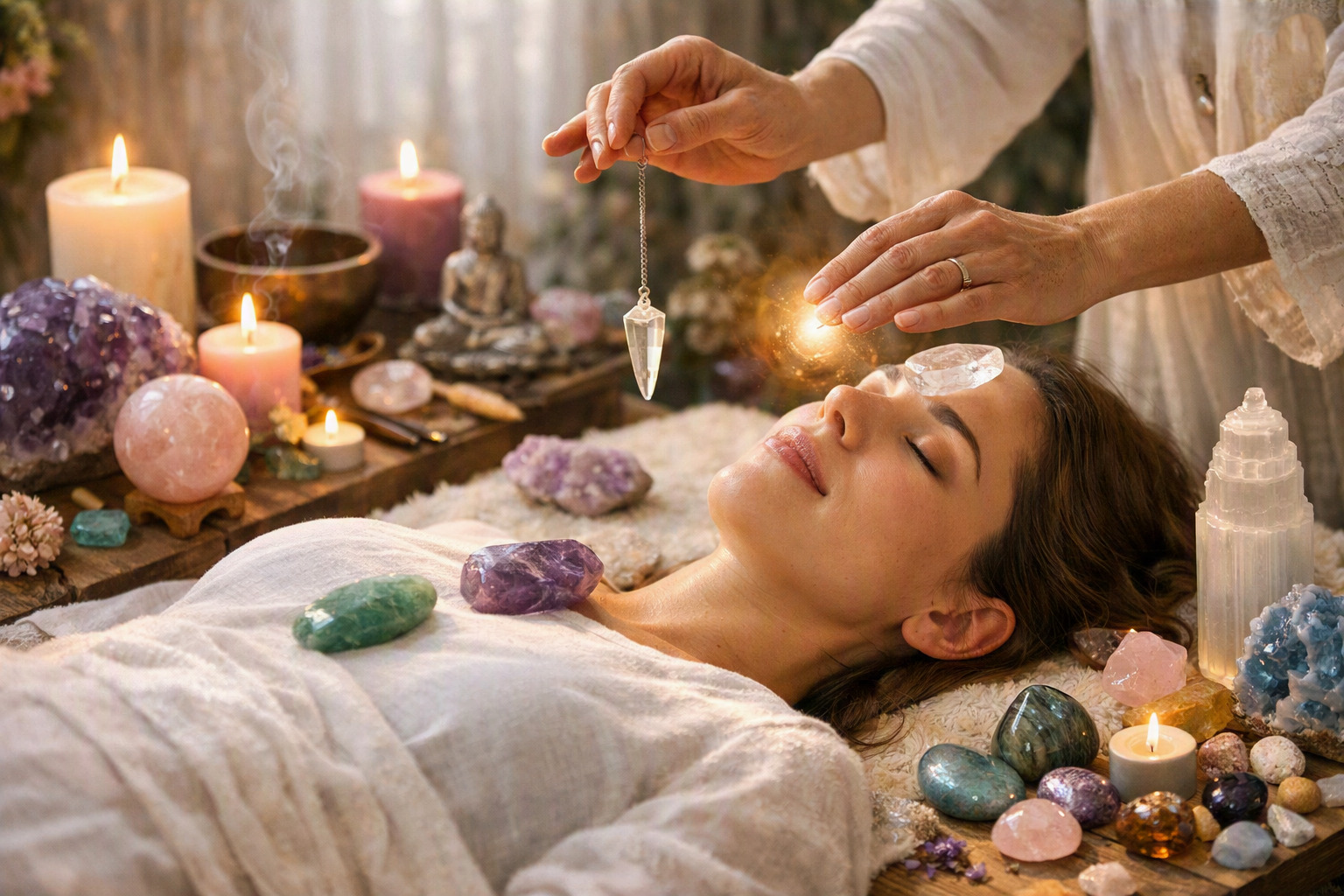
Some people place crystals directly on or near the body, often aligned with a chakra point — for example, a stone on the chest for heart-centered work, or at the forehead for mental clarity. Others simply hold a stone during meditation or breathwork.
Cleansing and Charging
New crystals are usually “cleansed” before first use — rinsed under water (for water-safe stones), smoked with incense, or left in moonlight overnight — to clear any energy they may have picked up. Many practitioners recharge their stones periodically the same way.
Pairing With Other Practices
Crystal healing is rarely used in isolation. It pairs naturally with energy healing, chakra healing and chakra balancing, meditation, and journaling, each reinforcing the same goal of self-awareness and calm.
7 Essential Crystals for Beginners
You don’t need a large collection to start. These seven stones cover most beginner goals — calm, clarity, protection, and confidence.
Clear Quartz — The All-Purpose Amplifier
Known as the “master healer,” clear quartz is often recommended first because it’s believed to amplify intention and energy generally. It’s a flexible starting stone if you’re not sure what you need yet.
Rose Quartz — Self-Love and Emotional Healing
Associated with the heart chakra, rose quartz is the go-to stone for self-compassion, emotional healing, and relationship work. Many beginners keep one on a nightstand or in a pocket during stressful weeks.
Amethyst — Calm and Clarity
A favorite for anxiety and overthinking, amethyst is linked to the third eye and crown chakras. It’s commonly used before sleep or during meditation to quiet a racing mind.
Black Tourmaline — Grounding and Protection
Believed to absorb negative energy and support grounding, black tourmaline is popular for people who feel overwhelmed by their environment — crowded workplaces, social media, or emotionally draining relationships.
Citrine — Confidence and Abundance
Linked to the solar plexus chakra, citrine is associated with motivation, confidence, and manifesting goals — a common pick for career transitions or new business ventures.
Selenite — Cleansing and Mental Clarity
Selenite is often used to cleanse other crystals and spaces. Its light, calming energy makes it a good tool for clearing mental fog before decision-making.
Carnelian — Energy and Motivation
Tied to the sacral chakra, carnelian is chosen for creativity, vitality, and overcoming procrastination — useful when you’re stuck in a rut.
How to Start a Crystal Healing Practice: Step by Step
Step 1: Choose One Stone, Not Ten
Beginners often over-collect. Pick one crystal that matches your current focus — calm, confidence, or grounding — and commit to using it daily for two weeks before adding more.
Step 2: Cleanse It Before First Use
Rinse it under running water (check first — some stones like selenite shouldn’t get wet), or pass it through incense smoke for a few seconds.
Step 3: Set a Clear, Simple Intention
Hold the stone and silently or aloud state one sentence describing what you want more of, or less of, in your life right now.
Step 4: Build a Two-Minute Daily Ritual
Hold the crystal during your morning coffee, place it on your desk while you work, or keep it under your pillow. Consistency matters more than duration.
Step 5: Reflect Weekly
Notice what shifted — mood, focus, sleep — and adjust your stone or intention accordingly. This is where crystal healing overlaps most with mindfulness journaling.
Common Beginner Mistakes to Avoid
Expecting Instant, Dramatic Results
Crystal healing works best as a slow, supportive practice — not a quick fix. Treat it like meditation, not medicine.
Skipping the Intention-Setting Step
A crystal without an intention is just a decorative stone. The ritual of intention is what gives the practice its structure and psychological benefit.
Forgetting to Cleanse Regularly
Stones used daily, especially during stressful periods, benefit from being cleansed every one to two weeks to “reset.”
Using Crystal Healing as a Substitute for Professional Care
Crystal healing supports emotional wellness, but it isn’t a treatment for diagnosed mental health conditions. If you’re navigating anxiety, depression, or trauma, it works best alongside — not instead of — professional counseling or therapy.
Crystal Healing and the Chakra System
Many beginners start with crystals specifically because they’ve read about chakras — the seven energy centers believed to run along the spine, from the root (security) to the crown (spiritual connection). Each chakra is traditionally associated with certain colors and, by extension, certain stones: red and black stones for the root, orange for the sacral, yellow for the solar plexus, green and pink for the heart, blue for the throat, indigo for the third eye, and white or violet for the crown.
If a specific area of your life feels consistently “stuck” — communication, confidence, boundaries — working with the corresponding chakra and its associated crystals can give your practice more direction than picking stones at random. This is also where working with a practitioner on structured chakra healing and chakra balancing can help beginners move beyond guesswork.
7 More Crystals to Grow Into as You Progress
Once your first stone feels familiar, these seven expand your practice into more specific, situational work.
Lapis Lazuli — Truth and Self-Expression
Tied to the throat chakra, lapis lazuli is chosen by people who struggle to speak up — in relationships, at work, or in setting boundaries. It’s often paired with journaling to unlock what you’ve been avoiding saying.
Green Aventurine — Luck and New Beginnings
Known as the “stone of opportunity,” green aventurine is a heart-chakra stone associated with luck, growth, and resilience through change — a common pick during career shifts or big life transitions.
Smoky Quartz — Releasing Stress and Negativity
A grounding stone like black tourmaline but gentler, smoky quartz is often used to process and release built-up tension rather than block it out — useful after a difficult week or a hard conversation.
Moonstone — Intuition and New Cycles
Linked to the divine feminine and lunar cycles, moonstone supports intuition, emotional balance, and navigating transitions — many people use it during hormonal cycles, pregnancy planning, or major life decisions.
Tiger’s Eye — Courage and Grounded Confidence
Where citrine builds confidence for abundance and success, tiger’s eye is grounded courage — useful before a difficult conversation, a job interview, or any moment that needs steady nerve rather than excitement.
Fluorite — Focus and Mental Organization
Often called the “genius stone,” fluorite is popular with students and anyone doing detail-heavy work — it’s associated with concentration, decision-making, and cutting through mental clutter.
Malachite — Transformation and Emotional Release
A stronger, more intense stone traditionally used for deep emotional release and transformation. Because it can surface buried emotions quickly, it’s generally better introduced later in a practice, once you’re comfortable working with what comes up — ideally with guidance from a practitioner.
Crystal Healing for Specific Life Situations
Rather than choosing a stone abstractly, many beginners find it easier to start from a real, current problem. Here’s how that translates into a starting point.
For Sleep and a Racing Mind at Night
Amethyst and moonstone are the two most commonly reached-for stones here. A simple bedtime ritual — holding the stone for two minutes while naming three things you’re releasing from the day — works better than expecting the stone to “do” anything passively under your pillow.
For Work Stress and Burnout
Black tourmaline (to buffer overstimulation) paired with citrine (to rebuild motivation) is a common combination for people feeling stretched thin at work. Keep one on your desk rather than only using it at home — the environment where the stress happens is where the ritual is most useful.
For Relationship Repair or Heartbreak
Rose quartz remains the primary choice, often paired with smoky quartz to process anger or grief before self-compassion work begins. This is also an area where relationship healing sessions can add structure that a solo crystal practice alone can’t.
For Manifestation and Business Growth
Citrine, green aventurine, and clear quartz are the standard “manifestation set,” typically used alongside a written intention or vision statement. This pairs naturally with dedicated manifestation work or, for entrepreneurs specifically, healing for business growth and prosperity.
For Grief and Emotional Processing
Smoky quartz, rose quartz, and malachite (once you’re ready for it) are commonly used together — grounding, self-compassion, and release, in that order. Grief work benefits significantly from combining this with guided energy healing rather than attempting it entirely alone.
Crystal Grids: Combining Stones with Intention
A crystal grid is a geometric arrangement of multiple stones placed around a central “anchor” crystal, built to amplify a single intention. Beginners often start with a simple grid: one center stone matching your main goal, surrounded by four to six smaller stones of a complementary type, arranged in a circle or a simple geometric pattern on a cloth or wooden board.
The arrangement itself isn’t the point — the process of laying it out slowly, stone by stone, while holding your intention, is the actual practice. Grids are typically left in place for a few days to a few weeks, then dismantled and the stones cleansed before reuse.
How to Buy Authentic Crystals (and Avoid Common Scams)
The crystal market has a real authenticity problem — dyed quartz sold as amethyst, glass sold as clear quartz, and synthetic stones sold at natural-stone prices are common, especially online.
Signs a Crystal May Be Fake or Treated
- Colors that look unnaturally uniform or unusually vivid (natural stones have subtle variation)
- Suspiciously low prices for stones like moldavite, larimar, or high-grade amethyst
- No visible inclusions, fractures, or natural imperfections at all
- Sellers who can’t tell you the stone’s origin or mining region
Where to Buy With More Confidence
Buying from a practitioner or wellness center that sources and curates its own stones — rather than an unverified online marketplace — significantly reduces the risk of ending up with dyed glass. It’s also easier to ask direct questions about origin and intended use before you buy.
Caring for and Storing Your Crystals
Sunlight and Water Sensitivity
Not every stone tolerates sunlight or water. Amethyst and rose quartz can fade with prolonged sun exposure; selenite dissolves in water. Always check a stone’s specific care needs rather than applying one rule to your whole collection.
Storage That Protects Energy and Appearance
Soft pouches or lined boxes prevent scratching between stones, and many practitioners store crystals away from direct sunlight and separate from electronics, which are believed to interfere with a stone’s energy (and, more practically, generate heat that can affect certain stones over time).
How Often to Recharge
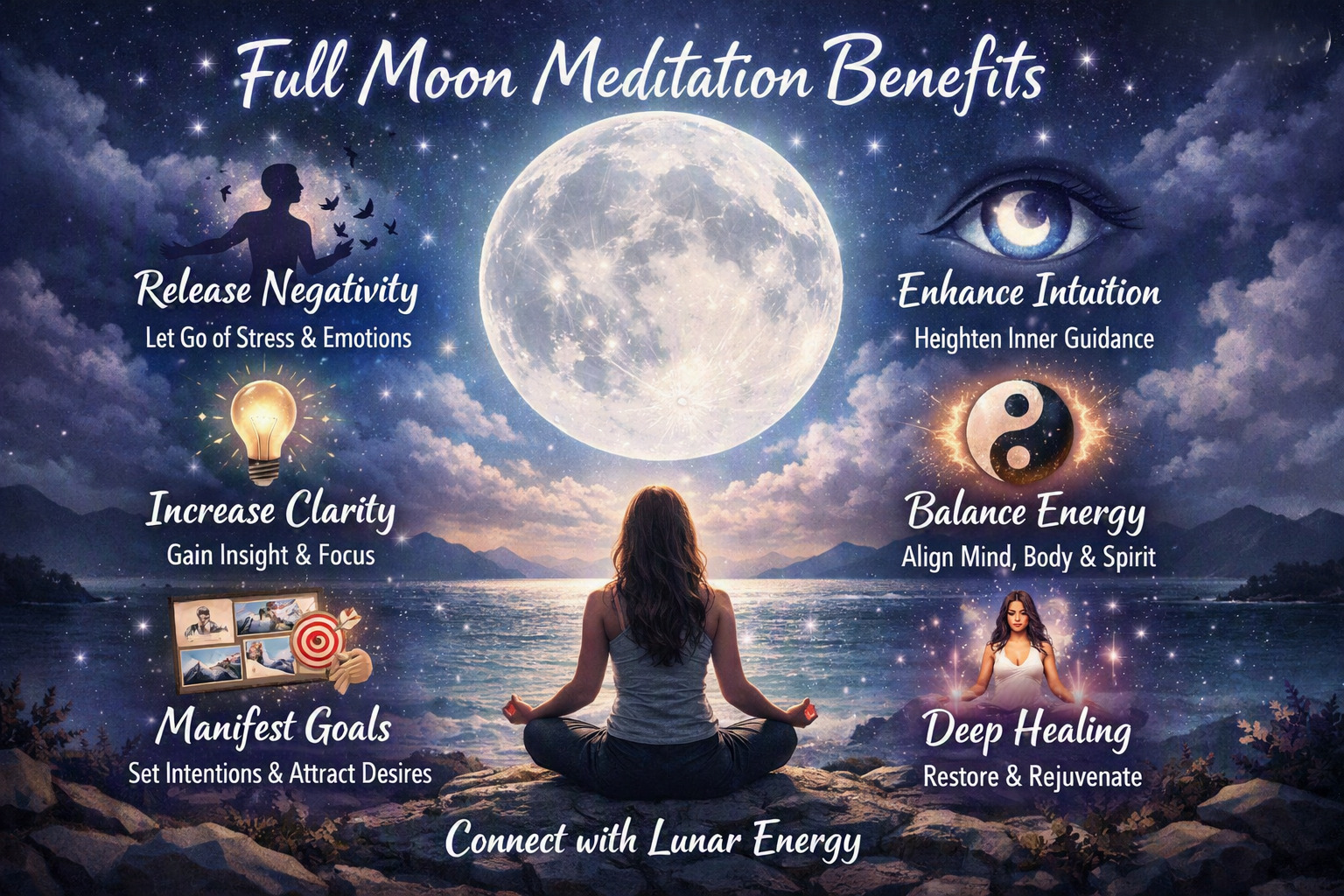
Beyond cleansing (removing absorbed energy), stones are often “recharged” under moonlight — especially during a full moon — to restore their intended purpose. A monthly recharge is a reasonable baseline for stones in regular use.
Do You Need a Practitioner, or Can You Start Alone?
You can absolutely start alone with a single stone and an honest intention — that’s the most accessible entry point. A practitioner becomes useful when you want a structured session, a body layout designed around your specific goals, or guidance on which stones and chakras to prioritize based on what’s coming up for you. Many beginners start solo, then bring questions to a guided energy healing or crystal healing session once they’ve built a basic routine.
Frequently Asked Questions
Do crystals actually have healing powers?
There’s no scientific evidence that crystals emit measurable healing energy. What’s well-documented is the psychological benefit of ritual and intention-setting, which crystal healing provides regardless of the stone’s mineral properties. Many people find genuine value in the practice as a mindfulness tool.
How do I know which crystal to choose first?
Start with what you’re drawn to visually, or pick based on your current focus: rose quartz for self-compassion, amethyst for calm, citrine for confidence, or black tourmaline for grounding. There’s no wrong first choice.
How often should I cleanse my crystals?
Every one to two weeks for stones used daily, or immediately after an emotionally intense day. Water-safe stones can be rinsed; others are better cleansed with incense smoke or moonlight.
Can crystal healing help with anxiety?
It can support relaxation and grounding as part of a broader routine that includes breathwork or meditation, but it isn’t a clinical treatment for anxiety disorders. If anxiety is significantly affecting your daily life, pair this practice with professional support.
Is crystal healing safe to combine with other therapies?
Yes. Crystal healing is commonly used alongside meditation, chakra work, and talk therapy. It’s a complementary practice, not a competing one, and works well as part of a wider holistic wellness routine.
How can I tell if a crystal is real or fake?
Look for natural variation in color and clarity — perfectly uniform, flawless stones are a red flag. Unusually low prices on rare crystals and sellers who can’t share a stone’s origin are also common signs of dyed or synthetic material. Buying from a curated, practitioner-sourced collection lowers this risk considerably.
What’s the difference between cleansing and recharging a crystal?
Cleansing removes energy the stone has absorbed from use or its environment — done through water, smoke, or sound. Recharging restores the stone’s intended purpose and vibrancy, most commonly through moonlight, especially during a full moon. Most practitioners cleanse more frequently and recharge on a monthly rhythm.
Can I use more than one crystal at a time?
Yes, though beginners are usually better served starting with one stone and a single clear intention. Once that feels familiar, combining two or three complementary stones — or building a simple crystal grid — is a natural next step.
Ready to Go Deeper Than a Solo Practice?
Starting alone is a great first step, but a guided session can help you understand exactly where your energy needs support — and which stones, layouts, and intentions will move the needle fastest for you.
Book a Crystal Healing session with Phoenix Soul-utions Holistic Wellness Center →
Based in Visakhapatnam, Phoenix Soul-utions offers personalized crystal healing, chakra balancing, and energy healing sessions designed around your specific goals — not a one-size-fits-all ritual.