If you’ve been wondering whether a sound bath is worth trying, here’s the direct answer: a sound bath uses layered vibrations from instruments like singing bowls, gongs, and chimes to guide your nervous system out of “fight or flight” and into deep rest. In a single 45-60 minute session, most people experience lower stress, better sleep that night, and a noticeable lift in mood. It’s not a religious ritual or a passive spa treatment — it’s a structured relaxation practice with measurable effects on the body, and it’s one of the fastest-growing wellness trends in Vizag right now.
Below, we break down exactly what happens during a sound bath, the specific benefits backed by research and clinical experience, who tends to benefit most, and what to expect if you book your first session.
What Exactly Is a Sound Bath?
A sound bath is a guided relaxation session where a practitioner plays a sequence of resonant instruments while you lie down, eyes closed, and simply listen. Unlike a massage, nothing touches your body — the “bath” refers to being immersed in sound waves rather than water. The vibrations travel through the air and, to a lesser extent, through the floor and your body, encouraging your brainwaves to shift from an alert beta state toward the slower, more restful alpha and theta states associated with deep meditation and the edge of sleep.
The Instruments Behind the Experience
Most sound baths draw from a consistent toolkit: Tibetan and crystal singing bowls, gongs, tuning forks, chimes, and sometimes the human voice through toning or chanting. Each instrument produces overtones — layered frequencies that the ear perceives as one rich, textured sound rather than a single note. It’s this layering, not volume, that produces the calming effect.
How It Differs from Meditation
Traditional meditation asks you to actively direct or observe your thoughts, which can feel difficult for beginners with a busy mind. A sound bath removes that pressure. The sound itself becomes the anchor, so your mind has something external to follow instead of fighting to stay quiet. This is one reason sound baths are often recommended as an entry point for people who “can’t meditate.”
The Science-Backed Benefits of a Sound Bath
Reduces Stress and Lowers Cortisol
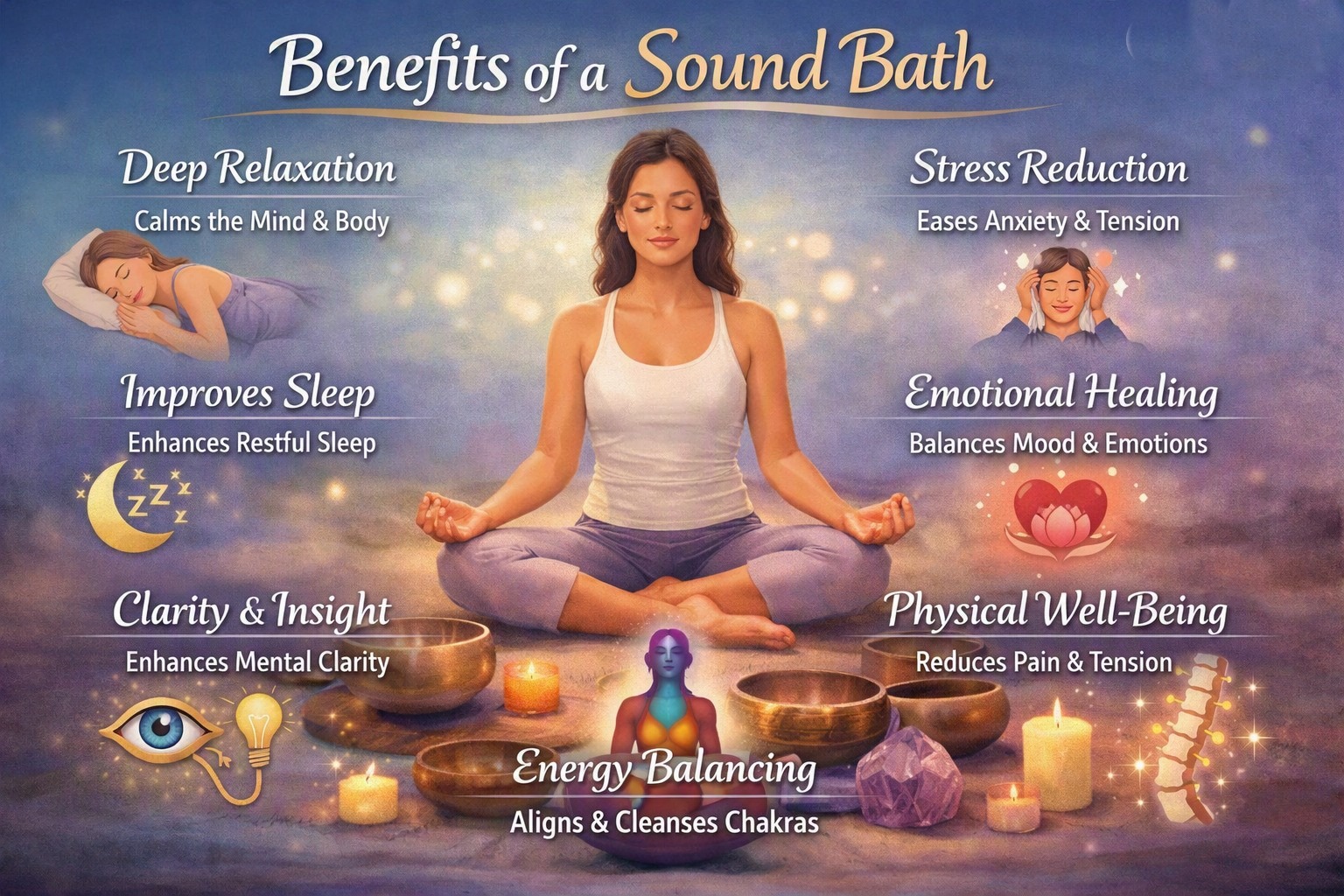
The most consistently reported benefit of sound bath therapy is a drop in perceived stress. Slow, sustained tones encourage the parasympathetic nervous system to take over from the sympathetic “fight or flight” response, which in turn lowers circulating cortisol — the body’s primary stress hormone. Participants frequently describe feeling like a physical weight has lifted by the end of a session.
Improves Sleep Quality
Because a sound bath nudges the brain toward theta-wave activity — the same state you pass through just before falling asleep — many people report their best night’s sleep in weeks after an evening session. If chronic stress or racing thoughts have been keeping you up, a sound bath before bed can help reset that pattern.
Eases Anxiety and Emotional Blockages
Sound healing doesn’t just relax the body; it often surfaces and releases stored emotional tension. It’s common to feel a wave of unexpected emotion — sometimes tears, sometimes simple lightness — partway through a session. Practitioners view this as the nervous system discharging tension it’s been holding onto, similar to what happens after a good cry or a long run.
Supports Physical Relaxation and Pain Relief
Muscle tension often loosens noticeably during a sound bath, particularly in the jaw, shoulders, and lower back — the areas where most people unconsciously store stress. Some participants with tension headaches or mild chronic pain report relief that lasts well beyond the session itself.
Sharpens Focus and Mental Clarity
Paradoxically, an hour of doing “nothing” often leaves people thinking more clearly afterward. By quieting mental noise, a sound bath gives the prefrontal cortex — the part of the brain responsible for focus and decision-making — a genuine break, which can translate into sharper thinking for the rest of the day.
Who Can Benefit Most from a Sound Bath?
Busy Professionals
If your week is packed with back-to-back meetings and decisions, a sound bath offers a rare hour where nothing is required of you. Many working professionals in Vizag now treat it the way they’d treat a gym session — a non-negotiable weekly reset.
Anyone Recovering from Burnout
Burnout recovery isn’t just about rest; it’s about retraining a nervous system stuck in overdrive. The passive, non-demanding nature of a sound bath makes it especially well-suited to people rebuilding their capacity to relax without forcing it.
People New to Meditation
Because there’s nothing to “do” or “get right,” sound baths are one of the gentlest ways to build a mind-body practice without the frustration beginners often feel with silent meditation.
What to Expect During a Sound Bath Session
Before the Session
You’ll typically be asked to arrive a few minutes early, remove your shoes, and settle onto a mat or cushion with a blanket. No experience or flexibility is required — you simply lie down.
During the Session
The practitioner moves through a sequence of instruments, often starting with softer tones and building toward deeper, more resonant sounds before tapering back down. Sessions usually run 45 to 60 minutes, and it’s completely normal to drift in and out of a light sleep.
After the Session
Expect to feel unusually calm, sometimes a little disoriented for a few minutes, and often more emotionally clear. Drinking water afterward is recommended, since the body can feel dehydrated after deep relaxation.
Sound Bath vs. Other Sound Healing Practices
Sound Bath vs. Reiki
Reiki is a hands-on (or hands-hovering) energy healing practice focused on channeling energy to specific parts of the body. A sound bath is entirely auditory and group-friendly, while Reiki is typically one-on-one. If you’re curious how the two compare in practice, our guide on Reiki vs. Pranic Healing breaks down the differences in approach.
Sound Bath vs. Chakra Healing
Chakra healing and chakra balancing often use sound as one tool among several — alongside crystals, breathwork, or guided visualization — to address specific energy centers. A sound bath is more general, working on the whole nervous system rather than targeting individual chakras.
If you’re new to the broader category, our beginner’s guide to sound healing instruments and our detailed look at whether sound healing is safe are both good next reads.
How to Choose the Right Sound Bath in Vizag
Not all sound baths are equal. Look for a practitioner with genuine training in sound healing modalities, a calm and private setting, and small group sizes so the experience doesn’t feel rushed. At Phoenix Soul-utions Holistic Wellness Center, sessions are led with over a decade of energy healing experience and are held in a dedicated, quiet space in Waltair Uplands — designed specifically for this kind of deep-rest work, not a repurposed yoga studio squeezed in between classes.
The Science Behind It: What’s Actually Happening in Your Brain and Body
Brainwave Entrainment, Explained Simply
Your brain naturally produces electrical activity at different speeds depending on what you’re doing — fast beta waves when you’re alert and focused, slower alpha waves when you’re relaxed, and even slower theta waves as you drift toward sleep. Sound bath instruments produce steady, repetitive vibrations, and your brain has a well-documented tendency to sync its own electrical rhythm to a strong external rhythm — a phenomenon called brainwave entrainment. When a gong or singing bowl sustains a slow, consistent tone, your brainwaves gradually “follow” it downward from beta toward alpha and theta, which is the same neurological territory associated with deep meditation, hypnagogic states, and the early stages of sleep.
The Vagus Nerve Connection
The vagus nerve is the body’s longest cranial nerve and the main communication line of the parasympathetic nervous system — the system responsible for “rest and digest” rather than “fight or flight.” Low-frequency vibrations, especially the kind produced by gongs and large singing bowls, appear to stimulate vagal tone through both sound and the physical sensation of vibration reaching the chest and torso. Improved vagal tone is linked in health research to better stress recovery, lower heart rate variability issues, and improved digestion — all of which helps explain why people often leave a sound bath feeling physically different, not just mentally calmer.
Binaural Beats and Entrainment Frequencies
Some practitioners layer in binaural beats — two slightly different frequencies played close together that the brain perceives as a single pulsing tone. This pulsing itself can nudge brainwave activity toward a target state, which is why certain sound baths are designed around specific goals: a faster alpha-focused session for creativity and focus, or a slower theta/delta-focused session for deep sleep support.
Common Myths About Sound Baths, Debunked
“You Have to Believe in Energy Healing for It to Work”
A sound bath’s core mechanism — vibration influencing brainwave activity and the nervous system — doesn’t require belief to function, the same way a warm bath doesn’t require belief to be relaxing. Skeptics often report the same physical relaxation response as committed practitioners.
“It’s the Same as Meditation Music”
Recorded music is composed for listening; a live sound bath is performed specifically to guide a physiological response, with the practitioner adjusting pace, volume, and instrument choice in real time based on the room. That responsiveness is difficult to replicate with a playlist.
“You’ll Fall Asleep and Miss the Benefits”
Drifting into a light doze during a sound bath is common and not a failure — the body still registers and responds to the vibrations while you’re in that in-between state, and many people report the deepest relaxation happens precisely when the mind briefly lets go.
“One Session Will Fix Chronic Stress or Anxiety”
A single session can produce a noticeable shift, but like exercise or therapy, the compounding benefits — better baseline sleep, lower reactivity to stress — tend to build with regular practice rather than a one-time fix.
Sound Bath at Home vs. a Guided Professional Session
It’s possible to find recorded sound bath tracks online, and they can be a helpful bridge between sessions. But a home recording can’t replicate the physical presence of the vibration moving through a room, the practitioner’s ability to read the group and adjust pacing, or the accountability of setting aside protected, uninterrupted time. Most people who try both find that a guided in-person session produces a noticeably deeper state of relaxation than a recording played through headphones or a speaker at home.
Preparing for Your First Sound Bath: A Simple Checklist
- Eat lightly beforehand. A heavy meal right before lying still for an hour can work against relaxation.
- Avoid caffeine for a few hours prior if you’re hoping for a deeply restful experience.
- Come with an open mind, not an agenda. Some sessions feel deeply emotional, others simply peaceful — both are normal.
- Silence your phone completely, not just on vibrate, since even a muted screen light can pull you out of the experience.
- Plan a quiet transition afterward. Jumping straight into traffic or a loud environment can undercut the calm you’ve just built; even ten quiet minutes afterward helps it settle in.
How a Sound Bath Fits Into a Broader Wellness Routine
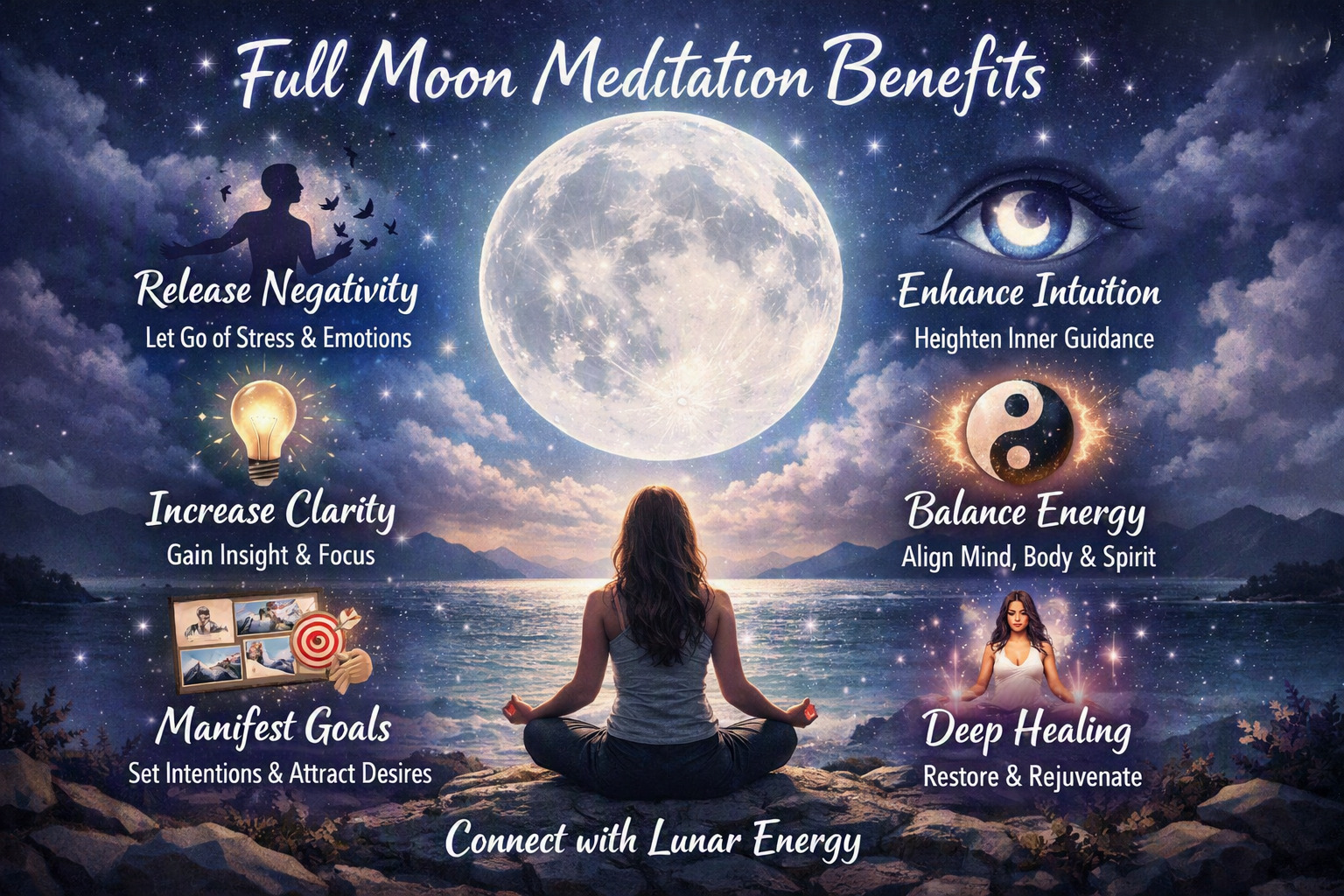
A sound bath rarely works in isolation — it tends to be most powerful as one part of a wider self-care rhythm. Many clients pair a monthly sound bath with our self-healing workshops for ongoing emotional processing, or time their sessions around the full moon meditation circle, since both practices work with the same principle of releasing what the body and mind are holding onto. If you’re dealing with a specific stressor — a business decision, a difficult relationship, or general anxiety — it can also help to pair sound healing with a more targeted practice like chakra healing and balancing or manifestation work for a more complete approach.
Frequently Asked Questions
1. How long does it take to feel the benefits of a sound bath?
Most people notice a shift in relaxation within the first 10-15 minutes of a session, and the deeper benefits — better sleep, lower stress — are often felt the same evening and can compound with regular sessions.
2. Is a sound bath safe for everyone?
Sound baths are safe for most healthy adults. People who are pregnant, have epilepsy, or have certain medical implants should check with a practitioner first, since specific frequencies and vibrations may need to be adjusted.
3. How often should I do a sound bath for the best results?
A monthly session is enough to notice ongoing benefits, but many people find weekly or biweekly sessions more effective during high-stress periods, similar to how regular exercise compounds over time.
4. Do I need any experience with meditation to try a sound bath?
No. A sound bath is one of the most beginner-friendly practices available precisely because there’s nothing to actively do — you simply lie down and listen.
5. What should I wear or bring to a sound bath session?
Wear loose, comfortable clothing you could nap in. Most venues provide mats and blankets, but bringing your own light blanket or eye mask can add extra comfort.