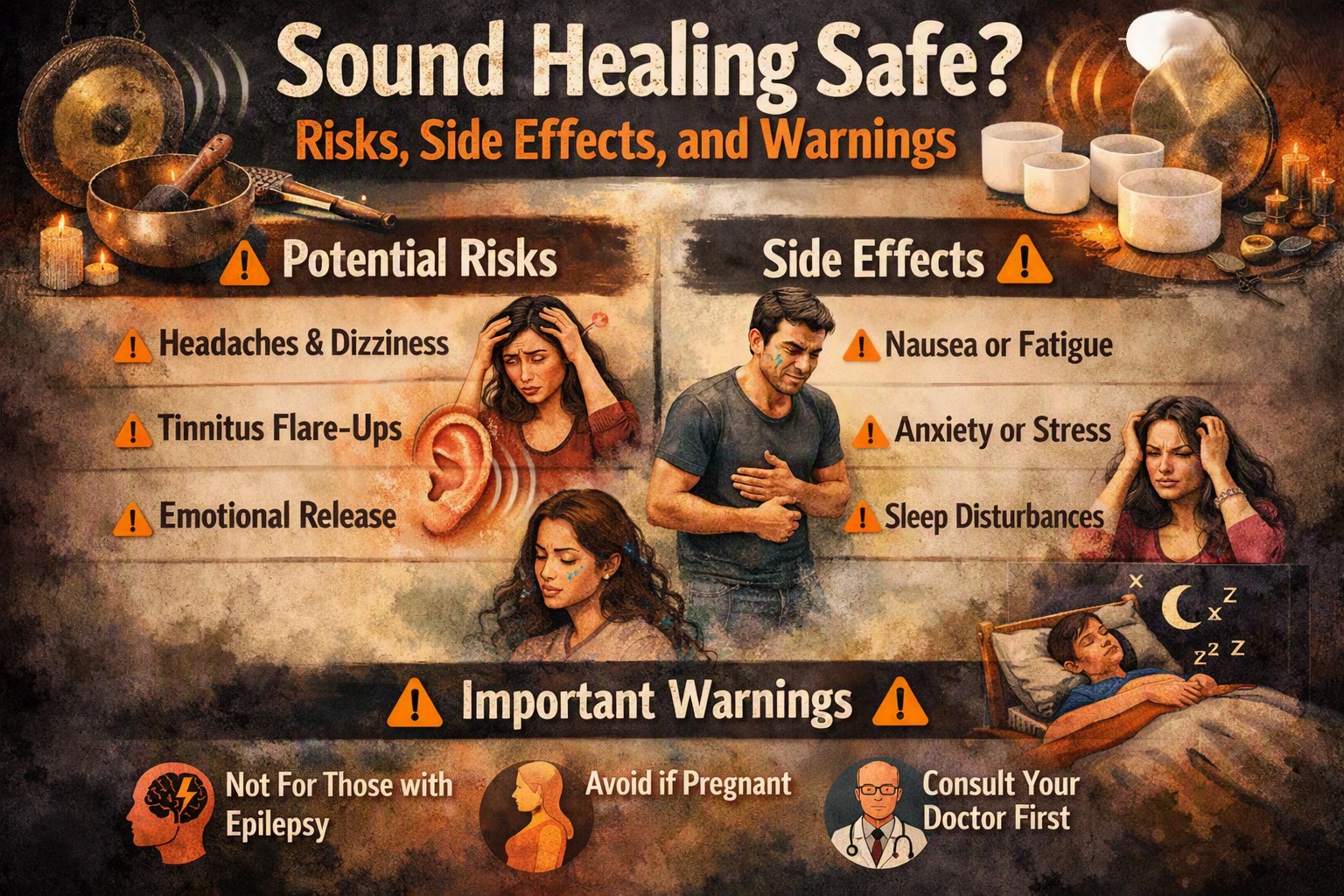
For most healthy adults, sound healing is safe — the real risks are narrow and specific, not universal. A handful of conditions (certain seizure disorders, pregnancy, pacemakers, active psychosis, or severe hearing sensitivity) call for caution or a doctor’s sign-off first. The most common “side effects” are mild and temporary: grogginess, emotional release, a headache, or ringing ears from a session that ran too loud. This guide breaks down exactly who should be careful, what can go wrong, and how to make sure your session is a safe one.
If you’re Googling this before your first sound bath or singing bowl session, you’re doing exactly the right thing. Sound healing isn’t regulated the way medicine is, which means quality and safety depend heavily on who’s holding the space — so knowing what to ask, and what to watch for, matters more than it would for, say, a yoga class.
What Sound Healing Actually Does to Your Body
Before getting into risk, it helps to understand the mechanism, because the risks follow directly from it.
Sound as a Physical Vibration, Not Just a Sound
Singing bowls, gongs, tuning forks, and drums don’t just produce something you hear — they produce vibration you can feel, through the air and sometimes through direct contact with the body. That vibration can shift your nervous system from a stressed, alert state toward a calmer, more parasympathetic one, which is why people commonly report slower breathing, muscle relaxation, and lowered heart rate during a session.
Why This Matters for Safety
Because the effect is physiological — not purely psychological — the same mechanism that makes sound healing relaxing for most people is also what makes it something a small group of people need to approach carefully. Strong vibration, sustained loud tones, and a deeply altered relaxation state aren’t neutral for every nervous system or every medical condition.
Who Should Be Cautious or Avoid Sound Healing
This is the section worth reading closely if you have any of the following.
Pregnancy
Many practitioners avoid placing singing bowls or tuning forks directly on the abdomen during pregnancy, out of caution rather than confirmed harm — there simply isn’t strong research either way on direct vibrational contact with the womb. Sitting or lying near instruments (not on the body) during a group sound bath is generally considered low-risk, but it’s worth telling your practitioner you’re pregnant so they can adjust bowl placement and volume.
Epilepsy or Seizure Disorders
Sound itself rarely triggers seizures the way flashing light does, but some people with seizure disorders report sensitivity to strong rhythmic drumming or very loud, sudden tones. If you have epilepsy, mention it beforehand so the practitioner can avoid abrupt volume spikes and let you sit further from the gong.
Pacemakers and Implanted Medical Devices
There’s no strong evidence that sound vibration interferes with a pacemaker, but some cardiologists advise caution around gongs and large bowls placed close to or on the chest, simply because the devices haven’t been extensively tested against that kind of sustained vibration. If you have a pacemaker or any implanted device, loop in your cardiologist and your practitioner before a session that involves direct bowl or fork placement on the torso.
Active Psychosis, Severe Dissociation, or Recent Trauma Flashbacks
Sound healing sessions often involve extended eyes-closed relaxation and can bring buried emotions to the surface. For people in an acute mental health crisis, actively psychotic, or prone to severe dissociative episodes, this kind of deep, unstructured relaxation can occasionally intensify symptoms rather than ease them. This is a case where sound healing should complement — never replace — care from a psychiatrist or therapist, and ideally happens with your treating clinician aware of it. If you’re already working with someone on mental space psychology or NLP-based therapy, it’s worth mentioning sound healing to them directly.
Hyperacusis, Tinnitus, or Sensitive Hearing
Gongs and large bowls can produce sound in the 90–110 decibel range at close proximity — loud enough to be uncomfortable, and in extreme, prolonged cases, loud enough to stress the ears. If you already have tinnitus, hyperacusis, or a history of noise-induced hearing damage, sit further from the gong, ask the practitioner about their typical volume, and don’t hesitate to use earplugs — a well-run sound bath will not object to this.
Post-Surgery or Acute Physical Injury
If you’ve had recent surgery, a broken bone, or an area of the body that’s still healing, avoid direct instrument placement over that area. Vibration close to a healing wound or fresh incision isn’t something you want to test out.
Common Side Effects (And Why They’re Usually Nothing to Worry About)
Most of what people experience after a session is mild, short-lived, and considered a normal part of the process rather than a red flag.
Grogginess or Spaciness
Because sound healing often shifts the brain toward slower theta and delta wave activity — similar to light sleep — it’s common to feel foggy or slow for 15–30 minutes afterward. Give yourself time before driving.
Emotional Release
Crying, sudden sadness, or a wave of old memories mid-session is one of the most frequently reported experiences and is generally considered a sign the nervous system is releasing tension, not a malfunction. Practitioners experienced in trauma-aware facilitation will hold space for this calmly rather than rushing to fix it.
Headache or Mild Nausea
Usually linked to volume, dehydration, or an empty stomach rather than the sound itself. Drinking water before and after a session, and eating something light beforehand, resolves this for most people.
Temporary Ringing in the Ears
If a session was particularly loud, mild, short-term ringing (tinnitus-like) can occur, similar to leaving a concert. It should resolve within a few hours. If ringing persists beyond a day, that’s worth mentioning to a doctor.
Vivid Dreams or Disrupted Sleep the Same Night
Because sessions often stir emotional material, some people report unusually vivid dreams or a restless first night’s sleep, which typically settles by the following day.
Real Warnings: When Sound Healing Crosses a Line
There’s a difference between the normal, mild effects above and signs that something about a specific session or practitioner isn’t right.
It’s Being Marketed as a Cure
Be wary of any practitioner claiming sound healing can cure cancer, replace psychiatric medication, or reverse a diagnosed medical condition. Sound healing is a genuine complementary wellness practice — for stress, relaxation, and emotional processing — but it is not a substitute for medical or psychiatric treatment. A responsible practitioner will say this plainly, not dodge the question.
The Volume Is Uncomfortably Loud and Won’t Be Adjusted
A gong bath should feel intense, not painful. If you ask a facilitator to turn down the volume or move the gong further away and they refuse or dismiss the request, that’s a legitimate reason to leave.
You’re Told to Stop Any Medical Treatment
No credible energy or sound healer should ever instruct you to stop medication, therapy, or a prescribed treatment plan. If this happens, that’s a serious red flag, not a minor caution.
The Practitioner Has No Training or Experience
Sound healing isn’t licensed the way therapy is, so credentials vary widely. Ask directly: how long have they been practicing, where did they train, and do they have experience working with your specific concern (anxiety, grief, chronic pain, trauma)? A practitioner with real training will answer this comfortably.
How to Have a Safe Sound Healing Session
- Tell the practitioner about any medical conditions beforehand — pregnancy, pacemakers, epilepsy, recent surgery, hearing sensitivity, or a mental health diagnosis you’re actively managing.
- Hydrate before and after. Dehydration worsens the grogginess and headache side effects.
- Eat something light beforehand, but avoid a heavy meal right before lying down for an hour.
- Sit or lie further from the gong if you’re sensitive to volume — you’ll still feel the full effect, just gentler.
- Bring earplugs if you have any hearing sensitivity. A good facilitator won’t mind.
- Give yourself 20–30 minutes after the session before driving or making decisions, since the fogginess is real.
- Choose an experienced, trauma-aware facilitator, especially if you’re processing grief, anxiety, or past trauma — this is where the difference between healing modalities like Reiki and energy healing actually matters in practice, not just in theory.
Sound Healing Instrument by Instrument: Which Carries More Risk?
Not all sound healing tools carry the same safety profile. Knowing what’s actually in the room with you helps you calibrate how cautious to be.
Tibetan and Crystal Singing Bowls
Generally the gentlest instrument in the sound healing toolkit. Volume is easy to control, and bowls are often placed near the body rather than on it. Risk is low for almost everyone; the main caution is placement on the torso for pregnant clients or anyone with an implanted device, as covered above.
Gongs
The instrument most likely to cause discomfort if a session is poorly managed. Gongs can produce sudden, powerful bursts of sound well above 100 decibels at close range, and their unpredictable overtones are part of what makes a gong bath feel so immersive — and also why volume and distance matter more here than with any other instrument. If you’re new to sound healing or sensitive to loud noise, a first gong bath is not the ideal starting point; a singing bowl session is.
Tuning Forks
Used for precise, localized work — often placed near or lightly on specific points of the body. Because the vibration is targeted rather than ambient, the same cautions around pregnancy, pacemakers, and recent injury apply directly to wherever the fork is placed.
Drums and Rattles
Rhythmic rather than tonal, and generally low-risk, though the driving rhythm of shamanic drumming has occasionally been reported (rarely) as uncomfortable for people with certain seizure sensitivities. Mentioning a seizure history to the facilitator remains the safest move.
Recorded Binaural Beats and Frequency Apps
Worth a separate mention since so many people’s first exposure to “sound healing” is a YouTube video or app rather than an in-person session. These are generally very low-risk since you control the volume yourself, but two cautions apply: binaural beats require stereo headphones to work as intended (each ear needs a slightly different frequency), and some apps market unverified claims about specific Hz numbers “curing” things — worth reading skeptically, covered more below.
Debunking Safety Myths About Specific Frequencies
A lot of anxiety about sound healing safety actually comes from misinformation about frequency claims, not from the practice itself. It’s worth separating the two.
The “432Hz vs 440Hz” Debate
You’ll see claims that standard 440Hz tuning is “unnatural” or even harmful, while 432Hz is “aligned with nature.” There’s no credible evidence that 440Hz tuning causes any physical harm — orchestras, radios, and phones have used it for decades without documented adverse effects. Preferring how 432Hz sounds is a matter of taste, not safety.
The “528Hz Repairs DNA” Claim
This is one of the most widely circulated sound healing claims online, and it isn’t supported by peer-reviewed evidence. It’s not dangerous to listen to 528Hz tones, but it’s worth being skeptical of any practitioner who frames specific frequencies as having a precise, guaranteed physiological effect like DNA repair — that’s a marketing claim, not a safety claim, and it’s a useful signal for how rigorously that practitioner approaches their work generally.
“Higher Volume Means Deeper Healing”
Not true, and worth saying plainly: louder is not more effective, and pushing volume past your comfort level has no established benefit. If a practitioner equates intensity with results, that’s a cue to ask more questions, not a reason to tolerate discomfort.
Sound Healing for Children and Older Adults
Two groups worth a specific word, since general safety advice online rarely addresses them directly.
Children
Sound healing is generally well-tolerated by children and is sometimes used in a gentler, shorter format for kids’ emotional regulation. The main practical caution is volume — a child’s ears are more sensitive, so shorter sessions, softer instruments (bowls rather than gongs), and a seat further from the sound source are sensible defaults.
Older Adults
Age itself isn’t a contraindication, but older adults are more likely to fall into one of the higher-caution categories above — pacemakers, hearing sensitivity, or a chronic condition affecting balance. A quick health-history conversation before the session, which any responsible practitioner will have anyway, covers this well.
How to Vet a Sound Healing Practitioner: A Safety Checklist
Since sound healing isn’t a licensed profession, the practitioner is the biggest variable in how safe your session actually is. Before booking, it’s reasonable to ask:
- How long have you been practicing, and where did you train?
- Do you ask clients about medical history and mental health conditions before a session?
- Are you willing to adjust volume, distance, or instrument placement on request?
- Do you present sound healing as complementary to medical care, or as a replacement for it?
- Have you worked with clients managing anxiety, grief, or trauma specifically?
A practitioner with real experience — particularly one with a clinical mental health background alongside energy work, like the approach at Phoenix Soul-utions — will typically welcome these questions rather than treat them as an inconvenience.
Frequently Asked Questions
Can sound healing damage your ears?
At normal, well-managed session volumes, no — but gongs and large bowls played very loudly and very close for extended periods can theoretically stress hearing the way any loud, prolonged noise can. If you have any hearing condition, sit further back or use earplugs, and choose a practitioner who’s willing to adjust volume on request.
Is sound healing safe for anxiety and depression?
For many people, yes — sound healing is commonly used alongside therapy to support relaxation and emotional regulation, which is why it pairs well with structured anxiety support. It should be treated as a complement to professional mental health care, not a replacement, particularly for moderate to severe depression or anxiety that’s already being treated.
Can sound healing trigger a panic attack?
It’s uncommon, but the deep relaxation and emotional release some people experience can occasionally feel intense rather than calming, especially for those with a trauma history. If this is a concern for you, let the practitioner know beforehand so they can check in with you during the session and adjust the pace.
Is it safe to do sound healing every week?
Yes, for most people, regular sessions are considered safe and are often more effective than occasional ones, similar to how consistency benefits meditation or yoga. There’s no established evidence of cumulative harm from regular sessions at normal volumes.
Who should not do sound healing at all?
There’s no condition that makes sound healing universally off-limits, but people with active psychosis, unmanaged seizure disorders, or those in an acute mental health crisis should only try it with their treating clinician’s awareness, and pregnant women or pacemaker wearers should flag it to their practitioner so bowl and fork placement can be adjusted accordingly.
Is it safe to combine sound healing with therapy or medication?
Yes, and it’s one of the more common ways people use it — as a relaxation and emotional-processing tool alongside, not instead of, ongoing therapy or prescribed medication. It’s worth mentioning to your therapist or doctor simply so they have the full picture, the same way you’d mention starting yoga or acupuncture.
Can a beginner start with a gong bath, or should they start with singing bowls?
Singing bowls are the gentler starting point since volume is easier to control and sessions tend to feel calmer overall. A gong bath is a wonderful experience once you know how your body responds to intense sound, but it’s not the ideal first introduction if you’re unsure how you’ll react to loud, layered tones.
Are online or app-based sound healing sessions as safe as in-person ones?
They’re generally lower-risk in one sense, since you control the volume yourself, but you lose the safety net of a trained facilitator checking in with you if a strong emotional release comes up. For anxiety, grief, or trauma work specifically, an in-person session with an experienced practitioner offers a level of support an app can’t.
The Bottom Line
Sound healing is a low-risk, well-tolerated practice for the vast majority of people, and the side effects most beginners experience — grogginess, emotional release, mild headache — are ordinary parts of the process rather than warning signs. The real risks sit with a small number of specific conditions and, just as importantly, with how experienced and transparent the practitioner is. Choosing a trained facilitator who asks about your health history, adjusts volume on request, and treats sound healing as a complement to medical care rather than a replacement for it is the single biggest safety factor in the entire practice.